design
Isometric 3D Product Mockup Design Prompt for Leonardo
Brand designers, e-commerce sellers, and social media marketers use this prompt to generate polished product hero shots without expensive photo shoots or 3D software. It produces scroll-stopping isometric mockups ideal for product launches, Instagram ads, and pitch decks. Startups love it for building a cohesive premium visual identity fast. Agencies use it to present concept directions to clients before physical prototyping.
Output Sample
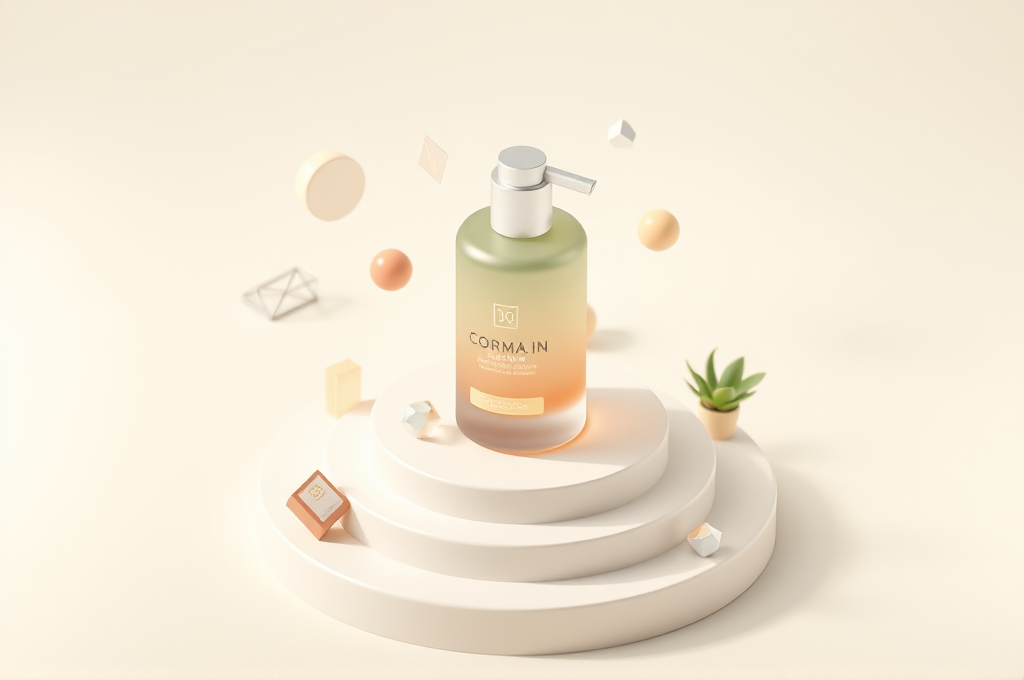
The Prompt
Create a hyper-detailed isometric 3D product mockup rendered as a premium miniature diorama. Center a single hero product (customizable: a cosmetic bottle, tech gadget, coffee cup, or branded packaging box) on a soft rounded pedestal platform. Render in a clean 45-degree isometric camera angle with true orthographic perspective, no distortion, perfectly balanced composition. Use a soft studio-lit environment with gentle global illumination, subtle ambient occlusion in the crevices, and delicate contact shadows grounding every element. Surface finishes should feel tactile and premium: matte plastic, brushed metal accents, frosted glass, and satin cardboard with visible fine paper grain and crisp foil-stamped logo details. Surround the product with small supporting props arranged neatly — tiny floating design elements, a rounded confetti of geometric shapes, minimal decorative plants, and micro packaging accessories that reinforce the brand story. Apply a modern pastel-plus-accent color palette: soft cream, muted sage, warm peach, with one saturated accent color pulled from the product for visual pop. Materials must show realistic subsurface scattering on soft objects and sharp specular highlights on glossy surfaces. Keep negative space clean and airy with a smooth gradient backdrop that fades from light to slightly deeper tone at the base. Emphasize crisp edges, clay-render smoothness blended with photoreal texture, and a squeaky-clean commercial aesthetic. Style: blend of C4D Octane render, product photography, and collectible toy diorama. Ultra sharp focus, 8K detail, cinematic soft rim lighting, professional e-commerce quality. Technical params: aspect ratio 1:1, Leonardo Phoenix or Diffusion XL model, guidance scale 7, PhotoReal or 3D Render style preset, high contrast, enhanced detail on. Negative prompt: blurry, low-poly, distorted perspective, text errors, cluttered, oversaturated, harsh shadows, watermark.
How to use
- Copy the prompt above using the copy button
- Replace any [bracketed placeholders] with your details
- Paste into leonardo
- Adjust and iterate based on the result
Shared by
Rosa Bernardo
Lisbon-based brand designer. AI is my brainstorming partner — I come to it with problems and leave with possibilities.
Works With
leonardo
Details
Categorydesign
AddedJul 7, 2026
Shared by
Rosa Bernardo
Lisbon-based brand designer. AI is my brainstorming partner — I come to it with problems and leave with possibilities.
Ready to use this?
Copy and paste directly into your AI tool.
Community Reviews
You might also like
Design
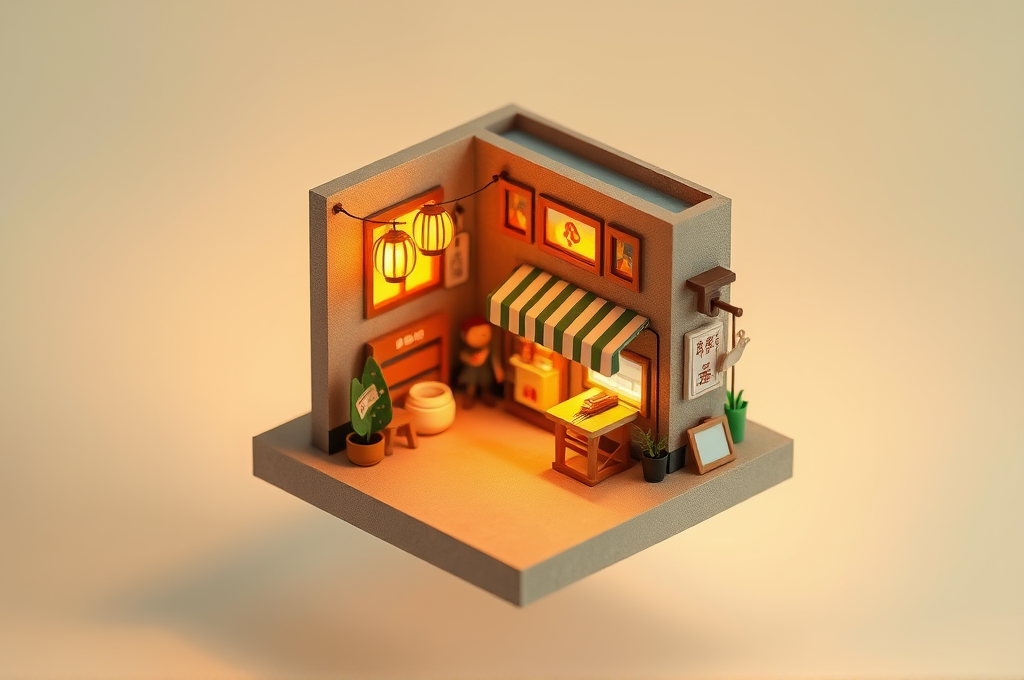
Isometric Miniature Diorama Design Prompt for Flux
Graphic designers, indie game studios, and social media brand managers use this prompt to produce eye-catching miniature-world visuals for app icons, product landing pages, and Instagram carousels. Illustrators and NFT artists get premium tilt-shift diorama scenes without building physical models. Marketing teams generate cohesive themed asset sets by swapping the central subject. The result is a polished, tactile 3D scene that feels handcrafted yet scalable across campaigns.
Create a hyper-detailed isometric miniature diorama presented as a tiny self-contained world floating on a soft neutral background. Render a [SUBJECT: cozy Japanese ramen alley] as a compact 3D cube-style scene viewed from a precise 35-degree isometric angle, corners perfectly aligned to a clean diagonal grid. Populate the diorama with tactile craft-model textures: matte painted cardboard, felt foliage, tiny sculpted clay figures, miniature glowing paper lanterns, brushed metal signage, and weathered wooden planks with visible grain. Use physically accurate scale-model detailing so the scene feels like a handcrafted tabletop set photographed in a professional product studio. Lighting: soft diffused key light from the upper left, gentle rim light for edge separation, and a subtle warm bounce fill to reveal texture depth. Include realistic soft shadows grounding the diorama on a smooth pastel gradient surface (choose mint, cream, or dusty rose). Add micro-details that reward close inspection: steam wisps, tiny reflections in puddles, glowing window interiors, dangling wires, potted plants, and scattered props. Color palette should be cohesive and slightly desaturated with one accent color pop. Emphasize tilt-shift miniature realism, crisp focus on the central structure, and gentle depth-of-field blur at the outer edges. Composition centered with generous negative space for a clean, gallery-like presentation. Style: 3D render, blender-quality, octane-inspired, product photography realism, playful yet premium. Negative prompt: flat 2D, cluttered background, harsh shadows, low detail, oversaturated, blurry textures, text artifacts. Technical params: --ar 1:1 --quality 2 --stylize 320 --chaos 8, render resolution 2048x2048, model flux-pro, guidance 3.5, steps 40, seed randomized for variation.
flux
#isometric#diorama
Tariq Abdullah
art
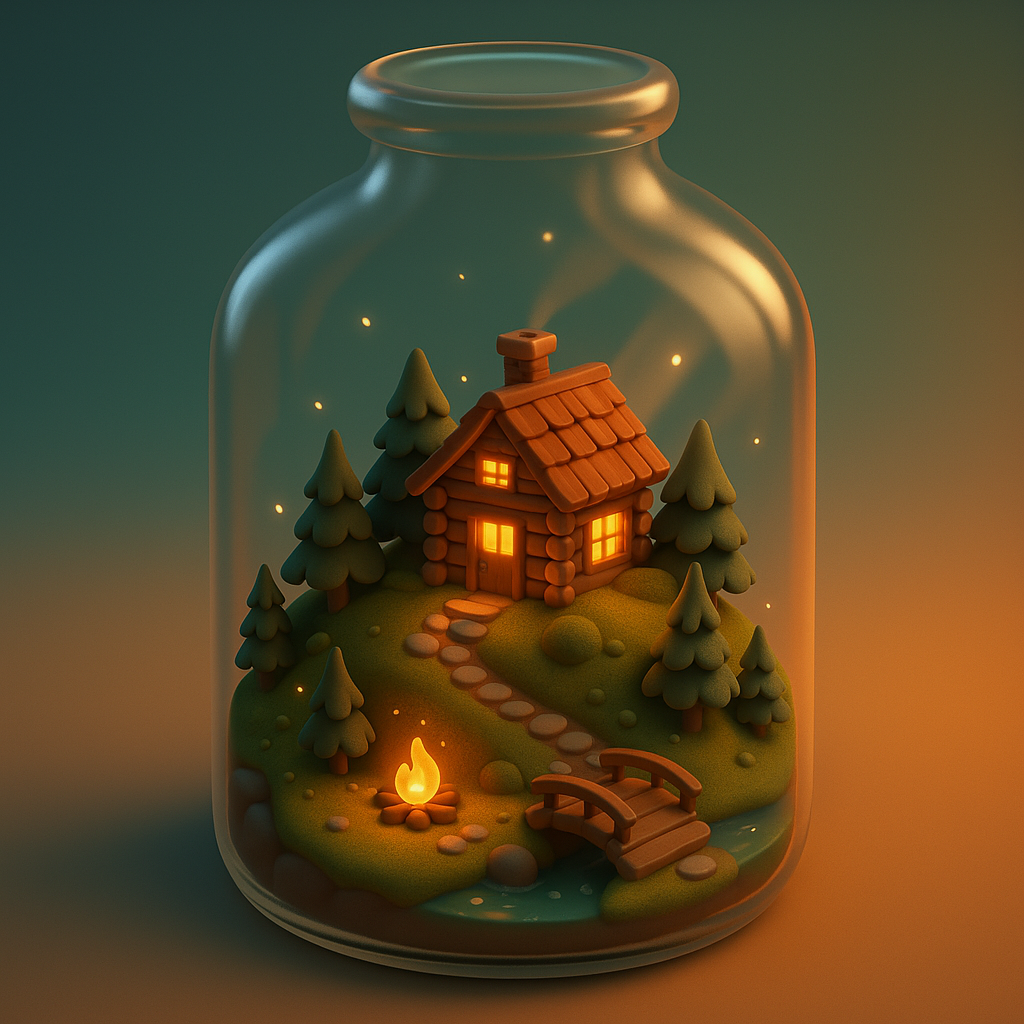
Isometric Miniature Diorama Ideogram Prompt for Tiny Worlds
Indie game artists, sticker and print shop owners, and social media creators use this prompt to produce shareable, highly engaging miniature-world art that performs exceptionally well on Instagram, Pinterest, and Etsy. The result is a polished, commercially-ready diorama render that looks like a premium 3D studio product. Unlike a simple 'tiny world' prompt, this version specifies isometric angle, tilt-shift blur, layered lighting, and a curated color palette so you get consistent professional results instead of muddy, off-scale outputs.
Create a hyper-detailed 3D isometric miniature diorama depicting a tiny self-contained world built inside a vintage glass terrarium jar. Inside, a cozy autumn cabin sits on a hill of moss and miniature pine trees, with a winding cobblestone path leading to a glowing front door. Add a tiny crackling campfire, a hand-carved wooden bridge over a crystal-clear stream, and miniature deer grazing nearby. Floating fireflies and soft volumetric light beams filter through the glass. Style: clean 3D render with soft clay-like textures, Pixar-meets-tilt-shift miniature realism, smooth rounded forms, and high-fidelity material detail (felt moss, polished wood, frosted glass). Lighting: warm golden-hour glow from inside the cabin contrasted with cool blue ambient light outside, soft global illumination, gentle rim lighting on each object, subtle bloom around light sources. Composition: perfect isometric 45-degree angle, centered subject, shallow depth of field with tilt-shift miniature blur on foreground and background edges, plenty of negative space around the jar against a smooth gradient backdrop. Color palette: warm ambers, burnt oranges, deep forest greens, soft creams, and muted teal accents for cozy seasonal harmony. Mood: whimsical, serene, nostalgic, and inviting — a peaceful pocket universe you want to crawl into. Camera angle: elevated isometric perspective looking slightly down into the diorama. Technical details: ultra-high resolution, crisp micro-details, photorealistic miniature scale, clean studio render. Aspect ratio 1:1, square format, sharp focus, professional product-render quality, no text, no watermark.
ideogram
#isometric#diorama
Isabelle Dupont
Design
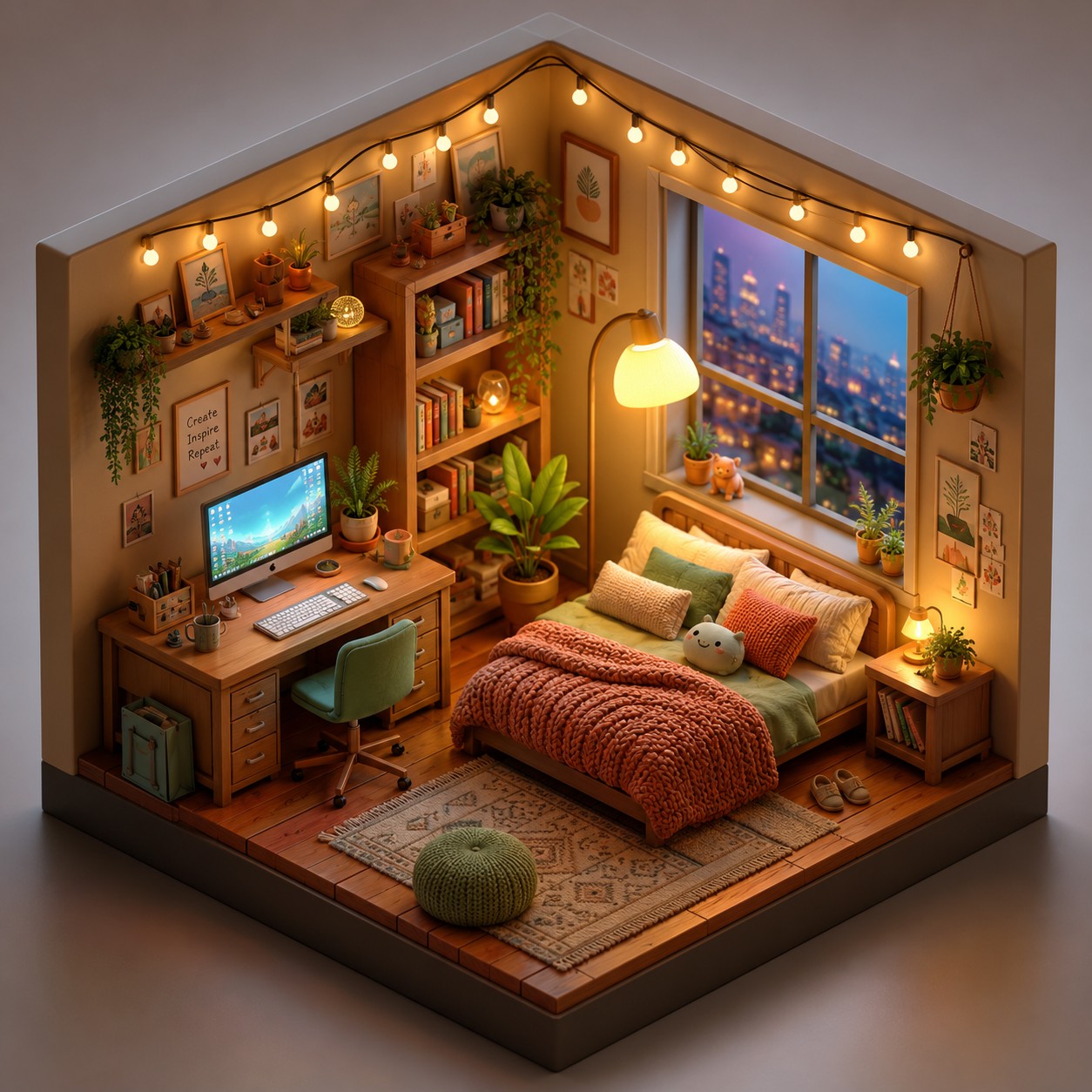
ChatGPT 3D Render — Cozy Isometric Room Diorama
Generate an adorable isometric 3D room diorama — perfect for app icons, UI illustrations, product visualizations, social posts, and cozy lifestyle renders made with ChatGPT.
A charming isometric miniature diorama of a cozy creative studio bedroom, rendered in soft clay-like 3D with gently rounded edges and a tactile toy-model feel that makes the whole scene look collectible and handcrafted. The compact room is packed with warm, inviting detail: a small wooden desk holds a glowing computer monitor, a keyboard, a steaming mug, and scattered stationery; a comfy single bed sits beneath the window with a chunky knitted blanket, plush layered pillows, and a tiny stuffed toy; a tall bookshelf is filled with rows of colorful miniature books, small framed photos, trailing potted plants, and decorative trinkets. A warm arc floor lamp arches over the bed, a soft patterned rug anchors the wooden floor, framed artwork and sticky notes decorate the walls, and a string of glowing fairy lights is draped along the sloped ceiling. Warm golden interior lighting radiates from the lamp and the computer screen, creating a snug, lived-in atmosphere, while cool blue evening light spills in through a large window that reveals a softly blurred bokeh city skyline at dusk; the contrast between warm and cool tones gives the render depth and mood. The materials are soft and physically based, with subtle subsurface scattering on fabrics, gentle ambient occlusion gathering in the corners, smooth matte surfaces, and realistic soft contact shadows. The color palette is warm and harmonious, combining cream, terracotta, sage green, honey wood tones, and gentle teal accents. Composition is a clean isometric three-quarter view, perfectly centered, with a softly blurred neutral background and a faint drop shadow grounding the floating room. The overall mood is cozy, calm, wholesome, and delightful. Technical qualities: global illumination, ray-traced soft shadows, shallow depth of field, ultra-detailed textures, 8K resolution, Octane and Blender style 3D rendering, professional product visualization quality, and the trending miniature diorama aesthetic that performs beautifully as ChatGPT-generated render art for icons, thumbnails, and lifestyle visuals.
ChatGPTDALL-E
#chatgpt#3d render
Felix Wagner
Design
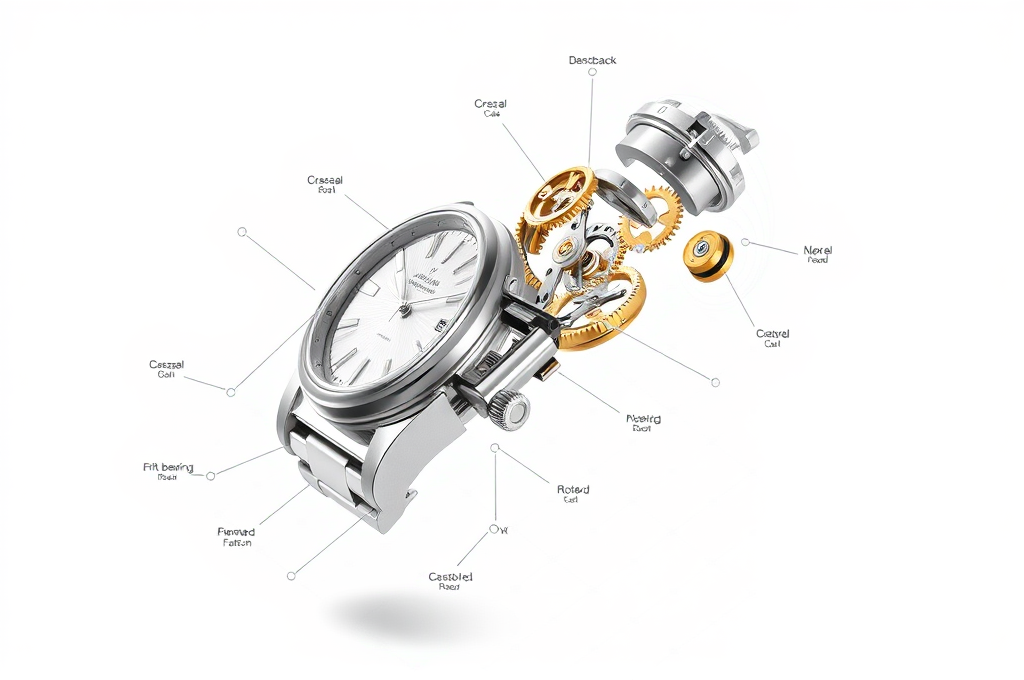
Exploded View Technical Product Diagram Prompt for DALL-E
Product designers, marketing teams, and technical illustrators use this prompt to generate polished exploded-view visuals for pitch decks, spec sheets, crowdfunding pages, and e-commerce listings. It produces a professional engineering-catalog aesthetic without needing CAD software or a photographer. Startups showcasing hardware and educators explaining how devices work get clear, annotated component breakdowns in seconds. The result communicates craftsmanship and complexity while looking premium and trustworthy.
Create a hyper-detailed exploded-view technical diagram of a [PRODUCT — e.g. vintage mechanical wristwatch], with every internal and external component separated and suspended in mid-air along a single clean diagonal axis, as if disassembled and frozen in space. Arrange the parts in precise sequential order following the true assembly path, maintaining perfect alignment so the eye traces how each piece fits into the next. Render each component — the case, bezel, crystal, dial, gears, mainspring, rotor, crown, and caseback — with photoreal material accuracy: brushed stainless steel, polished brass gears, ruby jewel bearings, and matte engraved surfaces. Use thin dotted guide lines connecting each separated part back to its assembly position. Add slim leader lines and minimalist sans-serif annotation labels (part names and numbers) floating in clean margins, styled like a premium engineering blueprint or patent illustration. Lighting should be bright, even studio light with soft shadows beneath each floating part to reinforce depth. Background is a seamless off-white or pale blueprint-gradient surface with subtle grid lines. Composition should feel balanced, airy, and instantly readable, with generous negative space around the labels. Prioritize crisp edges, accurate proportions, and a sense of scientific precision blended with modern product-marketing polish. The overall aesthetic should look like a luxury catalog cutaway meets a technical patent drawing. Technical params: aspect ratio 3:2, ultra-high resolution, sharp focus edge-to-edge, isometric-leaning three-quarter camera angle, soft ambient occlusion shadows, neutral color grading, DALL-E 3 high-detail rendering, no motion blur, clean vector-like linework for callouts.
dall-e
#exploded view#technical diagram
Maya Chen