design
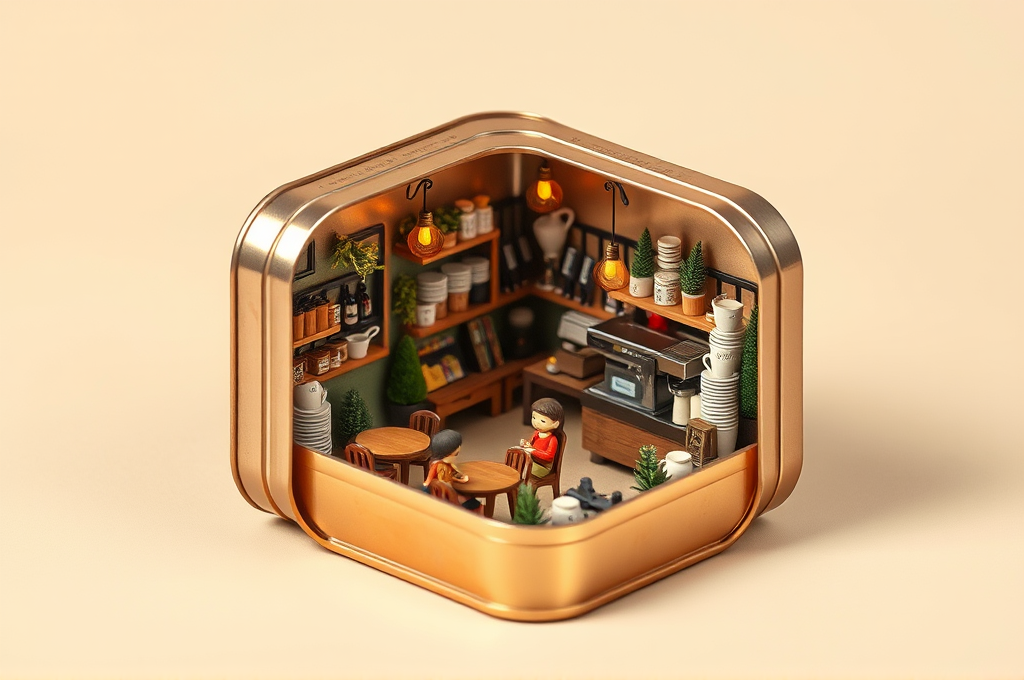
Isometric Miniature Diorama Design Prompt for Flux
Graphic designers, illustrators, and brand studios use this prompt to create eye-catching hero images for websites, app icons, and social campaigns. Small businesses can generate charming themed visuals that represent their shop or product in a memorable miniature form. Content creators use the isometric diorama style for scroll-stopping Instagram and Pinterest posts. The result is a polished, whimsical design asset that reads instantly and feels premium.
Output Sample
The Prompt
Create a highly detailed isometric miniature diorama contained within a single everyday object, rendered as a clean product-style design illustration. Subject: a cozy autumn coffee shop built inside an open vintage tin coffee can, with tiny customers, wooden furniture, a chalkboard menu, glowing pendant lights, and a barista behind a miniature espresso machine. Composition: strict isometric 35-degree camera angle, object centered on a seamless pale beige background, subtle contact shadow beneath the object for grounding. Style: hyper-detailed tilt-shift miniature aesthetic blended with clean 3D design rendering, realistic materials, physically based textures, soft matte surfaces mixed with polished metal and glass. Scale storytelling is key — everything inside is doll-sized and precisely arranged, with visible layers of depth from foreground steam to background shelves. Lighting: soft three-point studio lighting, warm interior glow spilling from the diorama contrasting against neutral cool ambient light, gentle rim light on the object edges, no harsh shadows. Color palette: warm caramel, cream, forest green, and copper accents against a muted neutral backdrop. Details: individual tiny props, hanging plants, stacked cups, a chalk sign reading 'OPEN', worn label texture on the tin, delicate volumetric steam. Mood: charming, inviting, whimsical yet premium. Finish with crisp focus on the miniature interior, subtle depth-of-field falloff at the edges to enhance the tiny-world illusion, and clean commercial-grade polish suitable for design portfolios. Emphasize craftsmanship, precise geometry, and satisfying symmetry. --ar 1:1 --style raw. Adjust the container object and interior theme (bakery, bookstore, greenhouse, arcade) to generate infinite variations while keeping the isometric framing consistent.
How to use
- Copy the prompt above using the copy button
- Replace any [bracketed placeholders] with your details
- Paste into flux
- Adjust and iterate based on the result
Shared by
Felix Wagner
Berlin-based music producer experimenting with AI-generated cover art and music video concepts. Flux is incredible for album covers.
Works With
flux
Details
Categorydesign
AddedAug 10, 2026
Shared by
Felix Wagner
Berlin-based music producer experimenting with AI-generated cover art and music video concepts. Flux is incredible for album covers.
Ready to use this?
Copy and paste directly into your AI tool.
Community Reviews
You might also like
art
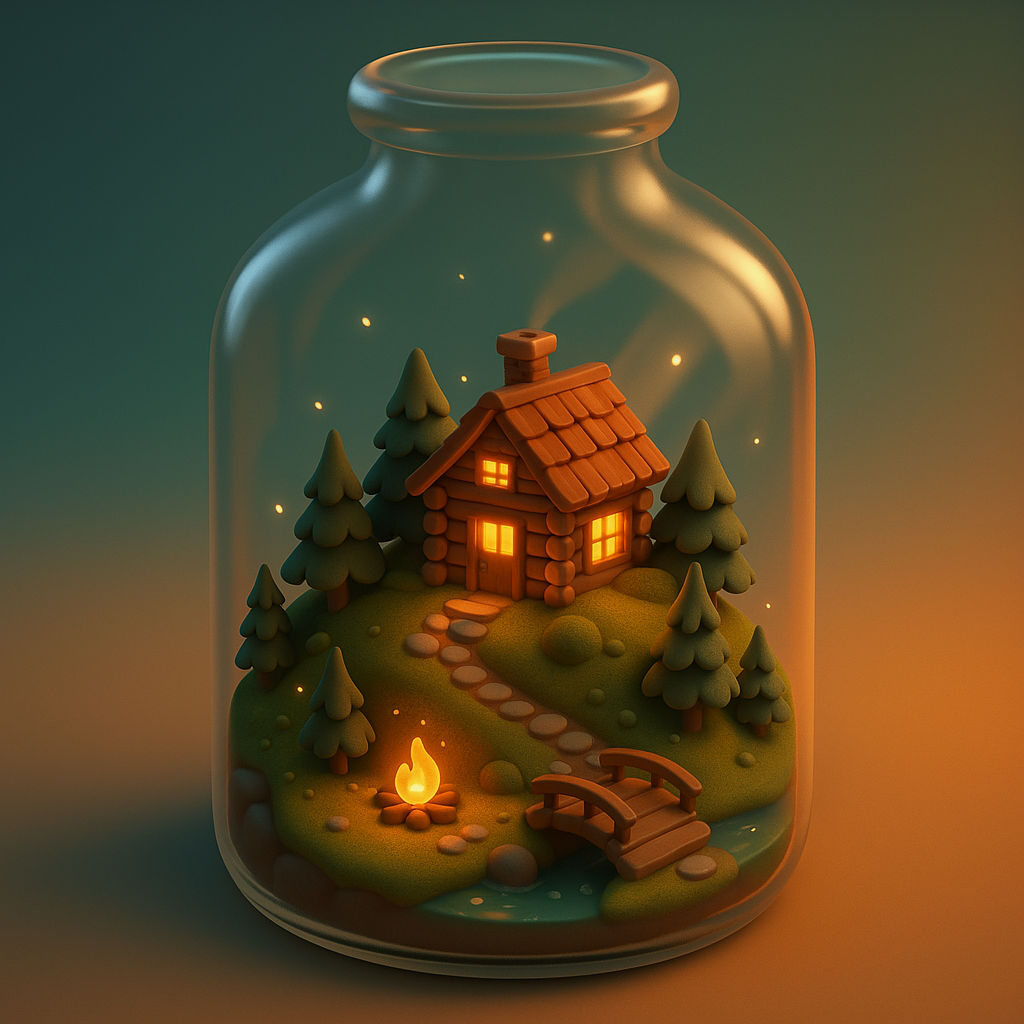
Isometric Miniature Diorama Ideogram Prompt for Tiny Worlds
Indie game artists, sticker and print shop owners, and social media creators use this prompt to produce shareable, highly engaging miniature-world art that performs exceptionally well on Instagram, Pinterest, and Etsy. The result is a polished, commercially-ready diorama render that looks like a premium 3D studio product. Unlike a simple 'tiny world' prompt, this version specifies isometric angle, tilt-shift blur, layered lighting, and a curated color palette so you get consistent professional results instead of muddy, off-scale outputs.
Create a hyper-detailed 3D isometric miniature diorama depicting a tiny self-contained world built inside a vintage glass terrarium jar. Inside, a cozy autumn cabin sits on a hill of moss and miniature pine trees, with a winding cobblestone path leading to a glowing front door. Add a tiny crackling campfire, a hand-carved wooden bridge over a crystal-clear stream, and miniature deer grazing nearby. Floating fireflies and soft volumetric light beams filter through the glass. Style: clean 3D render with soft clay-like textures, Pixar-meets-tilt-shift miniature realism, smooth rounded forms, and high-fidelity material detail (felt moss, polished wood, frosted glass). Lighting: warm golden-hour glow from inside the cabin contrasted with cool blue ambient light outside, soft global illumination, gentle rim lighting on each object, subtle bloom around light sources. Composition: perfect isometric 45-degree angle, centered subject, shallow depth of field with tilt-shift miniature blur on foreground and background edges, plenty of negative space around the jar against a smooth gradient backdrop. Color palette: warm ambers, burnt oranges, deep forest greens, soft creams, and muted teal accents for cozy seasonal harmony. Mood: whimsical, serene, nostalgic, and inviting — a peaceful pocket universe you want to crawl into. Camera angle: elevated isometric perspective looking slightly down into the diorama. Technical details: ultra-high resolution, crisp micro-details, photorealistic miniature scale, clean studio render. Aspect ratio 1:1, square format, sharp focus, professional product-render quality, no text, no watermark.
ideogram
#isometric#diorama
Isabelle Dupont
Design
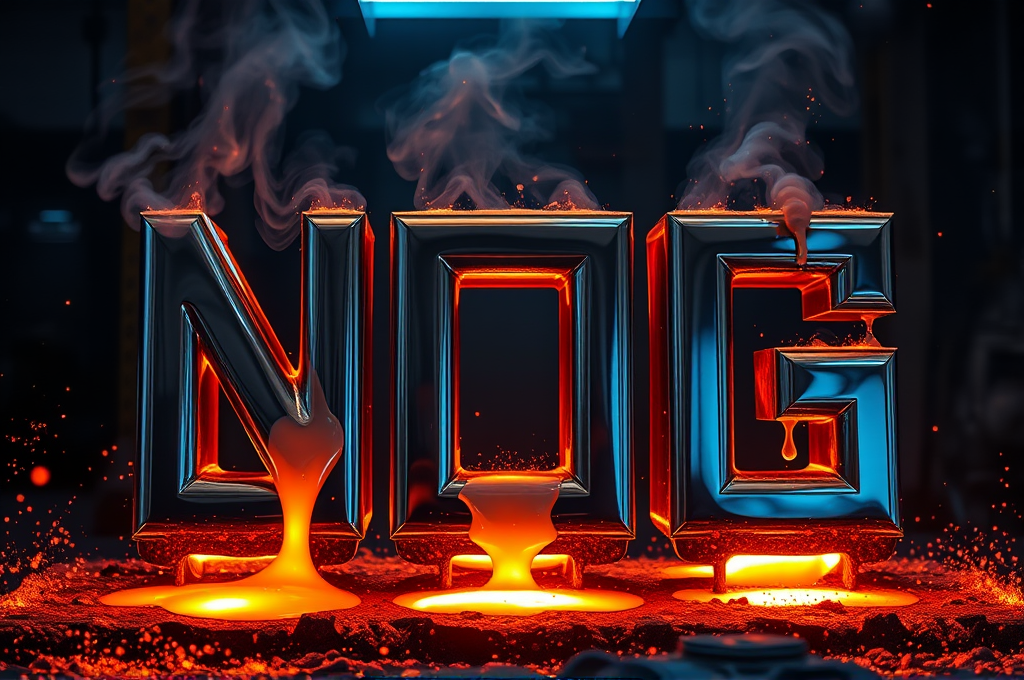
Molten Metal Pour Typography Design Prompt for Leonardo
Graphic designers and brand studios use this prompt to create striking hero typography for industrial, automotive, gaming, or heavy-metal music clients. Marketers deploy it for high-impact social media banners, album covers, and event posters that demand a premium, forged-in-fire aesthetic. The result is a bold, cinematic title graphic that instantly communicates strength, luxury, and intensity. It works especially well for product launches and masculine lifestyle branding.
Create a hyper-realistic 3D typography design where the letters are formed entirely from molten, freshly poured liquid metal captured mid-flow. Render the word or phrase [YOUR TEXT HERE] as glowing streams of liquid steel and iron cascading from an invisible crucible, with searing orange-white heat radiating from the thickest sections and cooling to a dark gunmetal gray at the edges. Each letter should appear partially solidified, showing the transition between glowing liquid metal and hardened crust, complete with molten droplets splashing, dripping tendrils, and sparks flying off the surface. Add fine ember particles and faint heat distortion rising from the forms. The surface must be richly reflective with sharp specular highlights, mirror-like chrome accents on the cooled portions, and deep internal glow on the molten zones. Position the typography against a dark industrial foundry backdrop with subtle bokeh and smoke haze to emphasize the intense temperature contrast. Use dramatic rim lighting from a cool blue source on the left to balance the warm molten glow and create cinematic depth. The composition should feel powerful, premium, and dangerous, like a luxury brand forged in fire. Letters should have weighty, bold geometric proportions with crisp readability despite the organic liquid flow. Emphasize photorealistic metal shaders, accurate subsurface scattering on glowing areas, molten viscosity, and physically accurate reflections. Technical parameters: aspect ratio 16:9, Leonardo Phoenix or Lucid Realism model, rendering quality high, guidance scale 7, contrast high, PhotoReal enabled, resolution 1536x864, negative prompt: blurry text, distorted letters, flat lighting, plastic texture, cartoonish, low detail, watermark.
leonardo
#molten metal#typography
Finn Callahan
Design
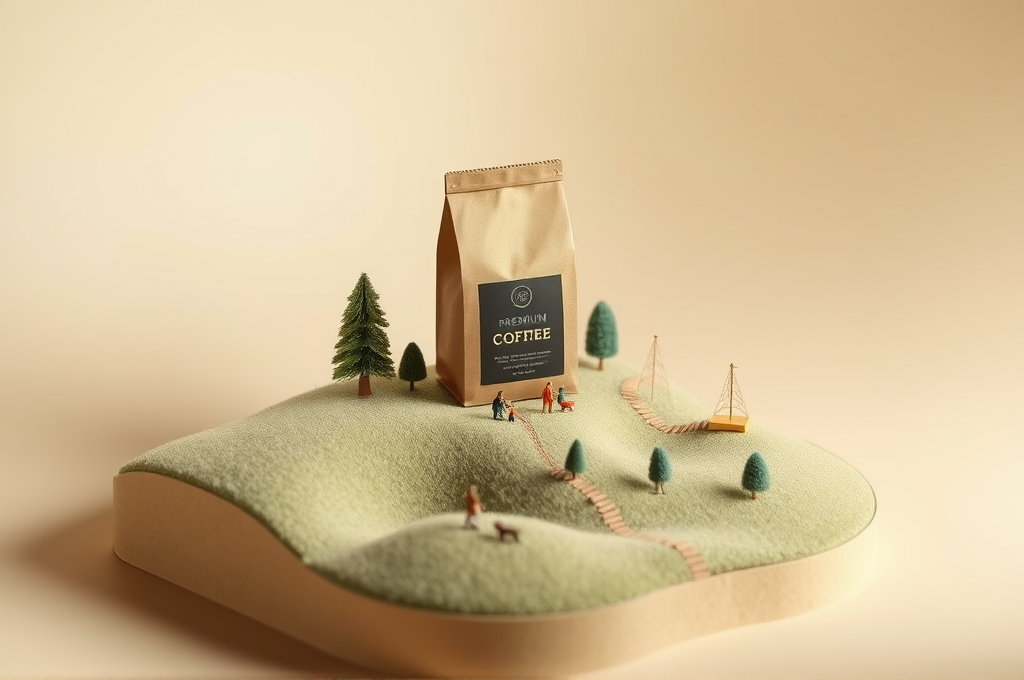
Isometric Miniature Diorama Packaging Design for DALL-E
Brand designers, e-commerce sellers, and marketing teams use this prompt to generate eye-catching hero visuals for product launches and social campaigns. It transforms ordinary packaging into a storytelling centerpiece that stops the scroll on platforms like Instagram and Amazon listings. Startups can prototype premium brand aesthetics without expensive 3D modeling or photo shoots. The result is a polished, miniature-world key visual that elevates perceived product value.
Create a hyper-detailed isometric miniature diorama packaging design concept presented at a precise 45-degree isometric camera angle. The central subject is a product (specify: cosmetic jar, coffee bag, perfume bottle, or snack box) rendered as a premium package, surrounded by a tiny handcrafted 3D world that visually communicates the brand story. Build a layered scene: miniature rolling hills, stylized trees, tiny figures, winding paths, and micro-architecture, all scaled like a collectible tabletop model. Use a clean studio background with a soft infinity curve in a complementary pastel tone. Render with physically based materials — matte cardboard textures, glossy label varnish, soft felt grass, smooth ceramic, and brushed metal accents. Lighting should be bright, diffused softbox studio lighting from the upper left, producing gentle contact shadows and subtle ambient occlusion in crevices for depth and realism. Apply a shallow depth of field with a tilt-shift effect to enhance the miniature toy-like feel, keeping the hero product in crisp focus. Color palette: harmonious, brand-forward, with two to three dominant hues plus a single pop accent color. Composition follows the rule of thirds with the product occupying the central visual weight and diorama elements radiating outward. Include tactile fine details: stitching, label typography placeholders, tiny ladders, foliage, and reflective highlights. Overall mood: polished, whimsical, premium, and commercially clean — ready for an advertising key visual or product launch hero. Aspect ratio 1:1, ultra high resolution, photorealistic 3D render crossed with craft-model aesthetic, sharp textures, realistic shadows. Avoid clutter, avoid text, avoid harsh shadows, avoid flat lighting, avoid low detail.
dall-e
#isometric design#miniature diorama
Leila Ahmadi
Design
Isometric Miniature Diorama Design Prompt for Flux
Graphic designers, indie game studios, and social media brand managers use this prompt to produce eye-catching miniature-world visuals for app icons, product landing pages, and Instagram carousels. Illustrators and NFT artists get premium tilt-shift diorama scenes without building physical models. Marketing teams generate cohesive themed asset sets by swapping the central subject. The result is a polished, tactile 3D scene that feels handcrafted yet scalable across campaigns.
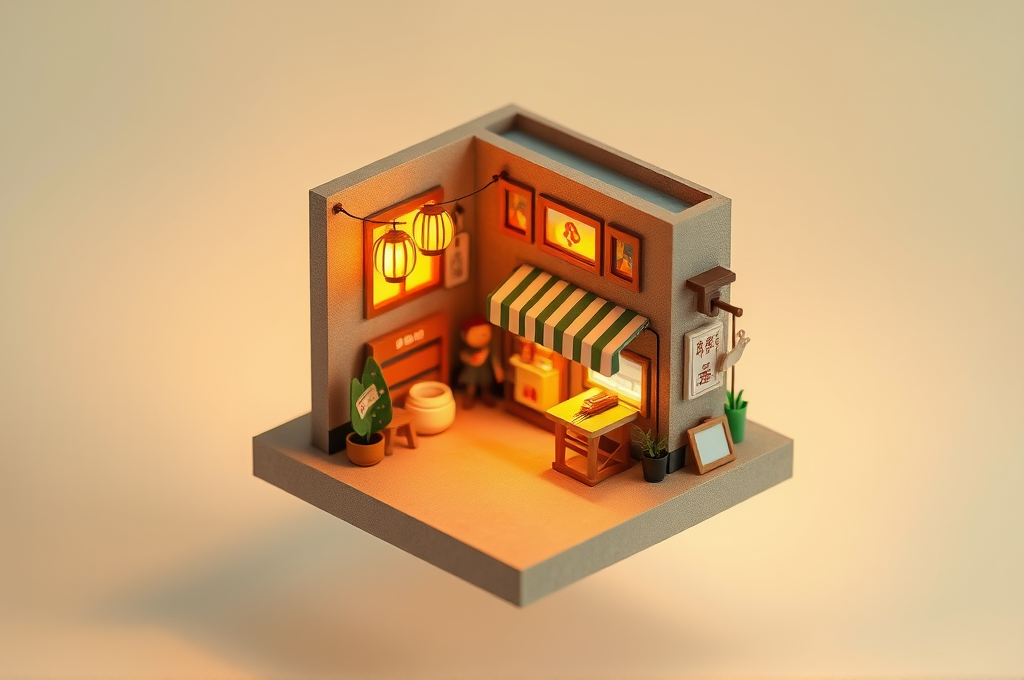
Create a hyper-detailed isometric miniature diorama presented as a tiny self-contained world floating on a soft neutral background. Render a [SUBJECT: cozy Japanese ramen alley] as a compact 3D cube-style scene viewed from a precise 35-degree isometric angle, corners perfectly aligned to a clean diagonal grid. Populate the diorama with tactile craft-model textures: matte painted cardboard, felt foliage, tiny sculpted clay figures, miniature glowing paper lanterns, brushed metal signage, and weathered wooden planks with visible grain. Use physically accurate scale-model detailing so the scene feels like a handcrafted tabletop set photographed in a professional product studio. Lighting: soft diffused key light from the upper left, gentle rim light for edge separation, and a subtle warm bounce fill to reveal texture depth. Include realistic soft shadows grounding the diorama on a smooth pastel gradient surface (choose mint, cream, or dusty rose). Add micro-details that reward close inspection: steam wisps, tiny reflections in puddles, glowing window interiors, dangling wires, potted plants, and scattered props. Color palette should be cohesive and slightly desaturated with one accent color pop. Emphasize tilt-shift miniature realism, crisp focus on the central structure, and gentle depth-of-field blur at the outer edges. Composition centered with generous negative space for a clean, gallery-like presentation. Style: 3D render, blender-quality, octane-inspired, product photography realism, playful yet premium. Negative prompt: flat 2D, cluttered background, harsh shadows, low detail, oversaturated, blurry textures, text artifacts. Technical params: --ar 1:1 --quality 2 --stylize 320 --chaos 8, render resolution 2048x2048, model flux-pro, guidance 3.5, steps 40, seed randomized for variation.
flux
#isometric#diorama
Tariq Abdullah