image
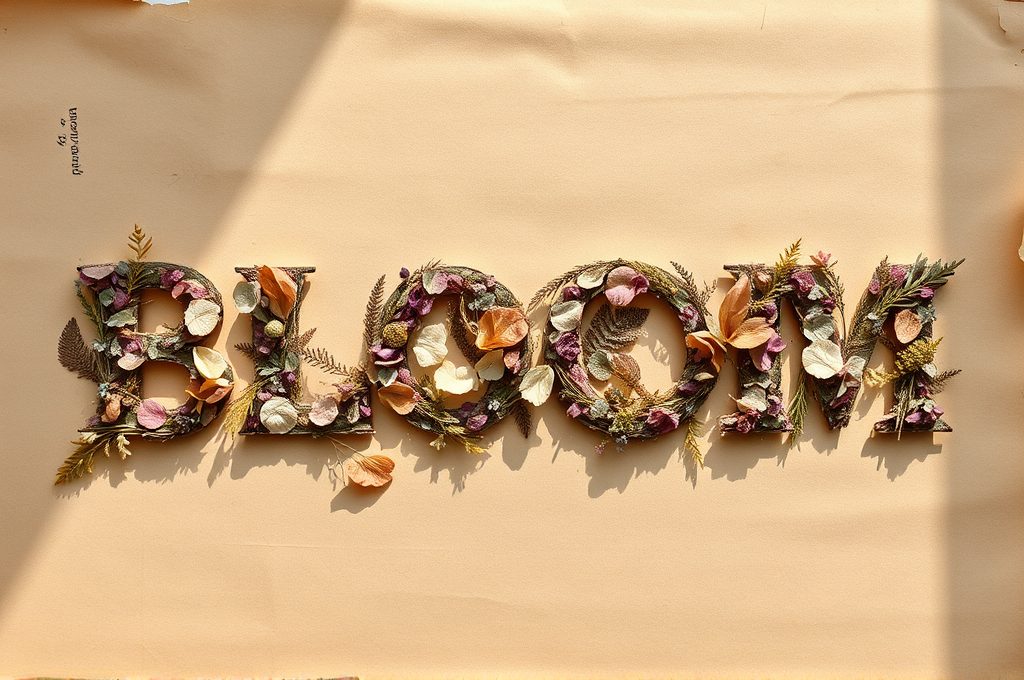
Pressed Flower Herbarium Typography Design Prompt for Ideogram
Graphic designers, wedding stationery creators, and boutique brand owners use this prompt to craft organic, nature-inspired lettering for invitations, book covers, and eco-conscious packaging. The result is sophisticated typography that blends botanical artistry with readable design, perfect for premium handmade aesthetics. Content creators and Etsy sellers leverage it for print-on-demand wall art and journals. It delivers a refined, archival look that feels both scientific and romantic.
Output Sample
The Prompt
Create a stunning typographic design where each letter is meticulously constructed from pressed and dried botanical specimens, styled like a vintage herbarium collection. Render the word or phrase [YOUR TEXT HERE] with letters formed entirely from flattened pressed flowers, delicate fern fronds, dried petals, slender stems, and translucent leaves preserved as if between glass. Use a muted, naturalistic palette of faded rose pinks, sage greens, ochre yellows, lavender purples, and papery browns, evoking aged specimens from a 19th-century botanist's notebook. Each letterform should maintain crisp, readable structure while revealing the intricate veins, textures, and imperfections of real pressed plant matter. Arrange the composition on a warm aged parchment or cream cotton-paper background with subtle fiber grain, faint water stains, and the gentle shadows of pressed material. Add small handwritten Latin botanical labels, fine ink annotations, and thin specimen-mounting tape accents in the corners for authentic archival detail. Light the scene with soft, even, diffused daylight that highlights the translucency of thin petals and casts delicate natural shadows. Emphasize macro-level realism: dried pollen dust, brittle edges, slight curling of petals, and faded chlorophyll gradients. The overall mood should feel timeless, organic, elegant, and scientifically curated. Compose the typography centered with balanced negative space, allowing the botanical letters to breathe against the background. Technical parameters: aspect ratio 16:9, rendering style realistic photographic macro with botanical illustration influence, high detail, magic prompt off, color palette muted-natural, resolution 2K, style weight high, negative prompt: neon colors, plastic texture, blurry letters, distorted anatomy, cartoonish, oversaturation.
How to use
- Copy the prompt above using the copy button
- Replace any [bracketed placeholders] with your details
- Paste into ideogram
- Adjust and iterate based on the result
Shared by
Ryan O'Sullivan
Full-stack developer at a Series B fintech. I use AI to ship 10x faster — Claude for code review, ChatGPT for architecture decisions. Occasional hackathon winner. Dublin → NYC.
Works With
ideogram
Details
Categoryimage
AddedOct 29, 2026
Shared by
Ryan O'Sullivan
Full-stack developer at a Series B fintech. I use AI to ship 10x faster — Claude for code review, ChatGPT for architecture decisions. Occasional hackathon winner. Dublin → NYC.
Ready to use this?
Copy and paste directly into your AI tool.
Community Reviews
You might also like
Related to:#pressed flower typography#herbarium design#botanical lettering#nature typography#ideogram prompt
🎨design
Design
Candied Citrus Jelly Gummy Typography Prompt for Ideogram
Food brands, dessert shops, and beverage marketers use this prompt to create mouthwatering hero graphics for packaging, menus, and social campaigns. Graphic designers generate eye-catching titles for summer promotions, juice launches, or candy product reveals. The glossy, translucent result grabs attention in feeds and conveys freshness instantly. It works equally well for playful event posters and premium editorial food features.
Create a bold, high-impact typography design where every letter is sculpted from translucent candied citrus and gummy jelly. Render the word "[YOUR TEXT HERE]" so that each glyph is formed from backlit orange, lemon, lime, and blood-orange slices fused with glossy fruit jelly, visible sugar crystals coating every edge. The letterforms should be plump, rounded, and three-dimensional, as if each character is a soft gummy candy you could bite into. Emphasize internal translucency: light passes through the jelly, revealing fibrous citrus pulp, tiny seeds, and radiating segment membranes glowing like stained glass. Dust the surfaces with fine granulated sugar that catches highlights, and add a few glistening wet droplets for a fresh, juicy feel. Use a confident, chunky sans-serif or soft bubble-letter structure so the fruit texture reads clearly at a glance. Scatter a handful of whole candied fruit slices, mint leaves, and loose sugar crystals around the baseline for garnish, but keep them subtle so the text stays dominant. Lighting should be bright, warm, and directional with strong backlighting to maximize the translucent glow, plus crisp specular highlights on the glossy jelly surfaces. Background: a clean, soft gradient of pastel cream to peach, slightly out of focus, letting the vivid citrus colors pop. Mood is playful, appetizing, vibrant, and premium. Technical parameters: aspect ratio 16:9, rendering style photorealistic macro food photography, ultra-detailed textures, shallow depth of field, color saturation high, magic prompt off for precise text accuracy. Ensure spelling is exact, letters evenly spaced, kerning balanced, and the composition centered with generous negative space.
ideogram
#citrus typography#gummy candy text
Chloe Hartmann
art
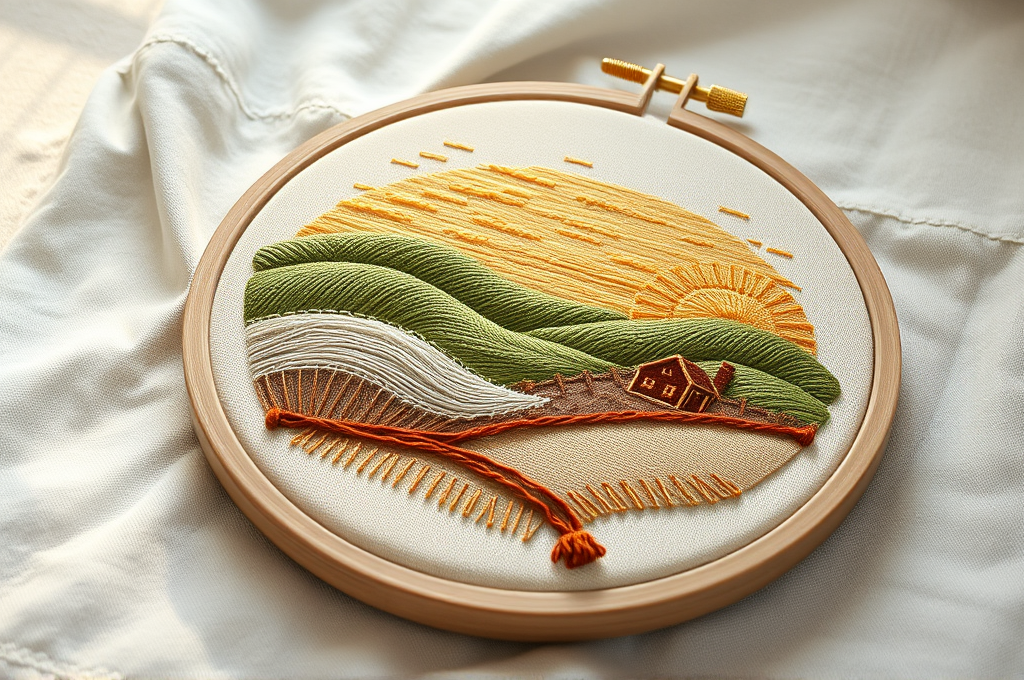
Embroidered Textile Art Prompt for Ideogram Stitch Craft
Craft brands, Etsy sellers, and home-decor designers use this prompt to generate embroidery-style artwork for product mockups, wall-art prints, and packaging without physically stitching. Illustrators and greeting-card makers produce cozy handcrafted visuals in seconds. The result is a warm, tactile textile aesthetic that reads as genuinely hand-sewn. It works for landscapes, florals, animals, and typography by swapping the subject description.
Create a hyper-detailed embroidered textile artwork that looks like a real hand-stitched fabric masterpiece stretched inside a wooden embroidery hoop. The subject is a serene countryside landscape at golden hour: rolling hills, a lone farmhouse, a winding dirt path, and a sky washed in warm amber and dusty rose. Render every element as raised satin-stitch and chain-stitch thread, with visible individual strands catching soft directional light. The hills should use gradient thread blending from sage green to deep forest, the sky built from horizontal long-and-short stitches, and the farmhouse detailed with tiny French knots for texture on the roof. Include loose thread ends, subtle needle holes in the linen backing fabric, and gentle fabric puckering around densely stitched areas to sell realism. The natural woven linen base should show a visible warp-and-weft weave in unstitched negative space. Add a wooden hoop frame with a brass tightening screw casting a soft shadow onto a neutral cream tabletop. Lighting is soft, warm studio light from the upper left, creating dimensional highlights along the raised threads and delicate shadows in the stitch valleys. Style: cozy, tactile, handcrafted, artisanal craft photography meets folk art. Color palette: warm earth tones, muted pastels, natural linen. Emphasize photorealistic thread sheen, cotton fiber fuzz, and material authenticity. Composition centered, slight top-down angle. High detail, macro sharpness on thread texture. Aspect ratio 1:1, ultra-detailed, 4K, professional textile art photography. Rendering: photorealistic, magic prompt off, style raw for maximum material fidelity.
ideogram
#embroidery art#textile design
Finn Callahan
image
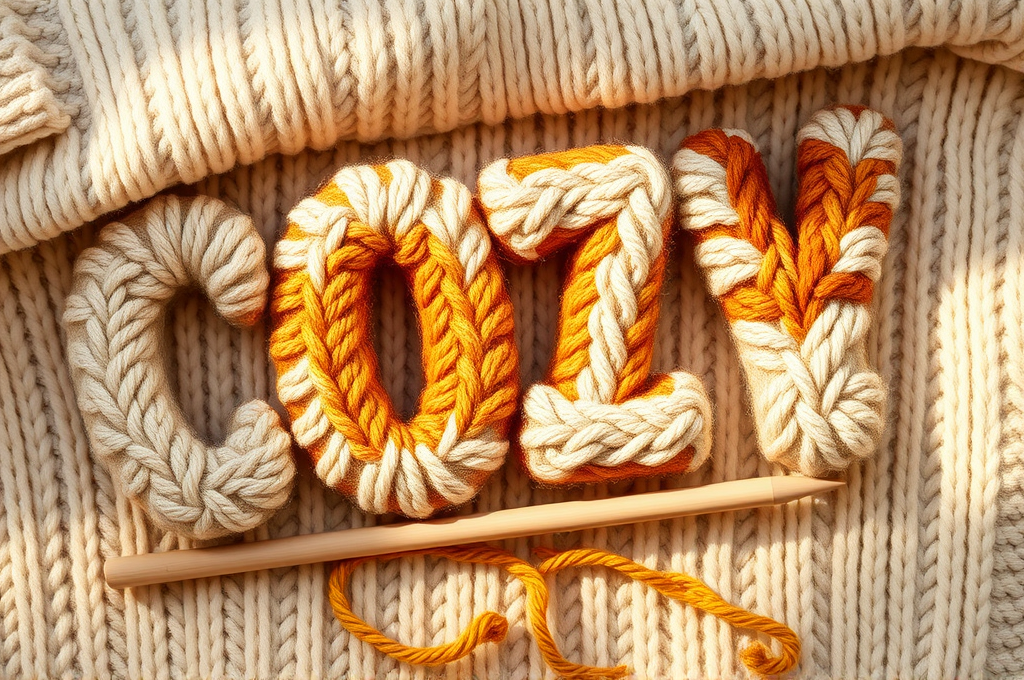
Chunky Knitted Wool Yarn Typography Prompt for Ideogram
Craft brands, knitting pattern designers, and cozy lifestyle influencers use this to create warm, tactile branded typography for product packaging, Etsy shop banners, and autumn-winter marketing campaigns. Greeting card companies and home decor retailers get Pinterest-ready hero images that feel handmade and inviting. The result is scroll-stopping fiber-art lettering that photographs like a real knitted piece without sourcing physical materials. Perfect for seasonal social media content that drives engagement in the maximalist craft-core niche.
Create a bold, three-dimensional typography design where each letter is entirely sculpted from chunky knitted wool and thick twisted yarn. Render the word or phrase as if hand-knitted by a master fiber artist, with every letter displaying authentic stockinette and cable-knit stitch patterns wrapping around rounded, pillowy letterforms. Show individual strands of fuzzy merino wool catching soft directional light, with tiny fiber frays, loose fuzz halos, and the natural irregular tension of real handcraft. Each letter should have genuine volume and depth, casting soft realistic shadows onto a warm, neutral background of folded cream wool fabric or a cozy knitted blanket texture. Use a palette of oatmeal beige, terracotta rust, mustard yellow, sage green, and dusty rose for a Scandinavian hygge aesthetic. Incorporate dangling yarn tails, visible purl bumps, braided cable twists, and the occasional wooden knitting needle resting beside the letters for authenticity. The lighting should be soft, warm, and diffused like an overcast morning window, emphasizing the tactile fuzziness and making viewers want to reach out and touch the fibers. Add extremely fine detail to the fiber texture so individual wool threads are crisp and photoreal. Compose the typography centered with generous negative space, shot from a slight top-down three-quarter angle to showcase dimensionality. Maintain clean, legible letterforms despite the organic material. Style: photorealistic macro craft photography, cozy editorial still life, Pinterest-worthy handmade aesthetic. Specify your exact text clearly. Technical params: aspect ratio 16:9, rendering style REALISTIC, magic prompt OFF for precise text control, high detail, 4K resolution, soft studio lighting, shallow depth of field with sharp focus on letterforms.
ideogram
#knitted typography#wool lettering
Connor Walsh
image
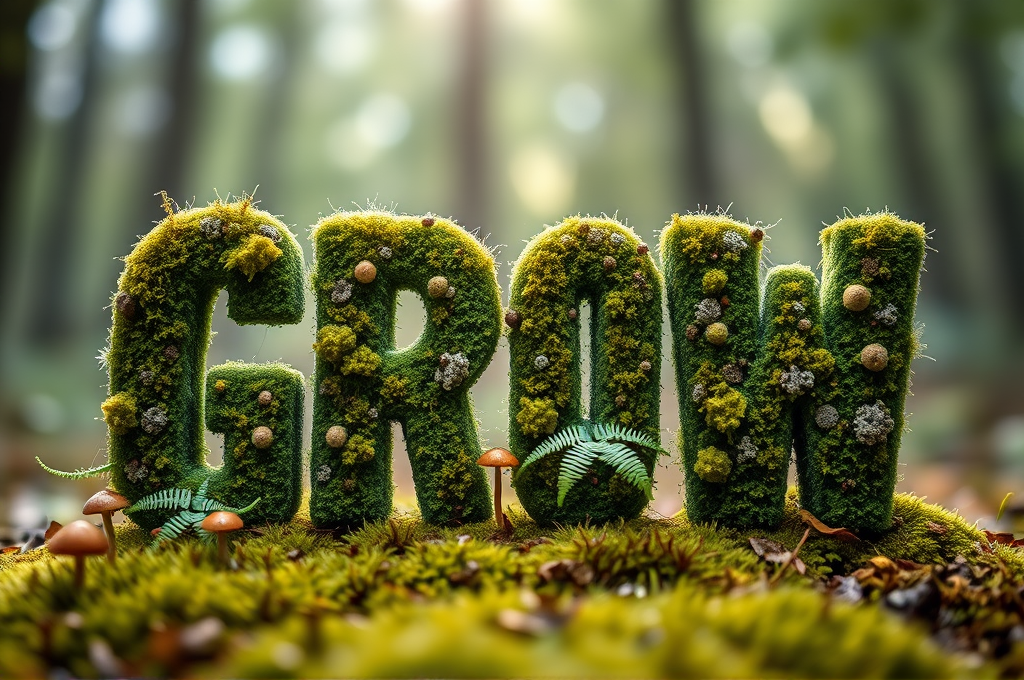
Living Moss & Lichen 3D Forest Typography for Firefly
Brand designers and eco-conscious marketers use this to create organic, nature-driven headline graphics for sustainability campaigns, wellness products, and botanical packaging. Content creators and bloggers use it for lush seasonal social media visuals and Pinterest-worthy headers. The result is a tactile, immersive word that feels alive and earthy, instantly signaling natural, green, and handcrafted values. It works beautifully for Earth Day promos, plant shops, and spa branding.
Create a hyperrealistic 3D typography design where the letters are entirely sculpted from living forest moss, soft cushion moss, pale sage lichen, and miniature curling ferns. Render the word "GROW" (or user's chosen text) as dimensional block letters standing upright on a damp forest floor, each character densely carpeted in layered emerald and chartreuse moss with velvety texture. Scatter clusters of pale grey-green reindeer lichen along the edges, delicate maidenhair fern fronds unfurling from the serifs, and tiny toadstool mushrooms sprouting at the base of each letter. Cover every surface in fine morning dew droplets that catch and refract soft light. Add a few translucent water beads clinging to spider silk strung between the letters. Lighting should be soft, diffused dawn light filtering through a forest canopy from the upper left, casting gentle dappled shadows and creating a cool, misty, humid atmosphere. The background is a deeply blurred bokeh forest in muted greens and browns, keeping full focus on the mossy lettering. Emphasize extreme micro-detail: individual moss strands, the fuzzy texture of lichen, the fine veins in fern leaves, and the sparkle of condensation. Color palette: rich forest greens, moss emerald, chartreuse highlights, soft grey-green lichen, earthy brown accents. Composition: centered hero text, eye-level macro perspective, shallow depth of field. Mood: enchanted, serene, botanical, eco-conscious. Technical params: aspect ratio 16:9, high detail, photographic realism, macro lens look, Content type: Art, Style strength: strong, Reference strength: medium, Visual intensity: high, 4K resolution output.
firefly
#moss typography#forest lettering
Liam Walker