art
Tilt-Shift Miniature Diorama World Flux Prompt for Art
Digital artists, social media content creators, and print-on-demand sellers use this prompt to generate eye-catching miniature-world art that performs exceptionally well on Instagram, Pinterest, and wall-art marketplaces. The result is a charming, instantly shareable tilt-shift diorama that looks like a professionally photographed handcrafted model. It beats a simple prompt by precisely controlling the focal plane, golden-hour lighting, material textures, and aerial composition that make miniature photography convincing rather than flat. The commercial appeal is high because miniature worlds sell as posters, phone wallpapers, and stock visuals.
Output Sample

The Prompt
A breathtaking hyper-detailed miniature diorama of a bustling coastal fishing village at golden hour, rendered as a handcrafted tabletop model world. Tiny clay-textured cottages with weathered terracotta rooftops cluster along a cobblestone harbor, where miniature wooden fishing boats bob in resin-cast turquoise water. Microscopic figurines of fishermen unload baskets of catch while scaled-down seagulls hover frozen in mid-flight. Subject: an intricate scale-model village teeming with life and storytelling detail. Style: photorealistic tilt-shift miniature photography blended with handcrafted diorama craftsmanship, soft macro realism, painterly toy-like aesthetic, reminiscent of professional model railway photography. Lighting: warm directional golden-hour sunlight casting long soft shadows, gentle rim light glinting off the water, subtle ambient occlusion in alley shadows, dreamy luminous glow. Composition: high three-quarter aerial perspective looking down at a slight angle, strong tilt-shift blur with a razor-sharp focal plane across the village center, foreground and background melting into creamy bokeh. Color palette: warm honey golds, terracotta orange, seafoam teal, soft cream, muted slate gray accents. Mood: whimsical, cozy, nostalgic, enchantingly intimate and serene. Camera angle: elevated bird's-eye 45-degree tilt-shift view simulating a large-format macro lens. Technical params: ultra-detailed textures, shallow depth of field, f/2.8 simulated, 8K resolution, crisp micro-detail on focal subjects, realistic material rendering of clay, wood, resin water, and painted miniatures, subtle film grain, cinematic color grading. --ar 16:9 --quality 2 --raw photorealistic miniature diorama, tilt-shift effect, high dynamic range, soft natural bokeh, hyperrealistic scale model.
How to use
- Copy the prompt above using the copy button
- Replace any [bracketed placeholders] with your details
- Paste into flux
- Adjust and iterate based on the result
Shared by
Ren Taniguchi
Kyoto street photographer who uses AI to post-visualise and plan compositions. An unexpected workflow that works.
Works With
flux
Details
Categoryart
AddedJun 28, 2026
Shared by
Ren Taniguchi
Kyoto street photographer who uses AI to post-visualise and plan compositions. An unexpected workflow that works.
Ready to use this?
Copy and paste directly into your AI tool.
Community Reviews
You might also like
Design
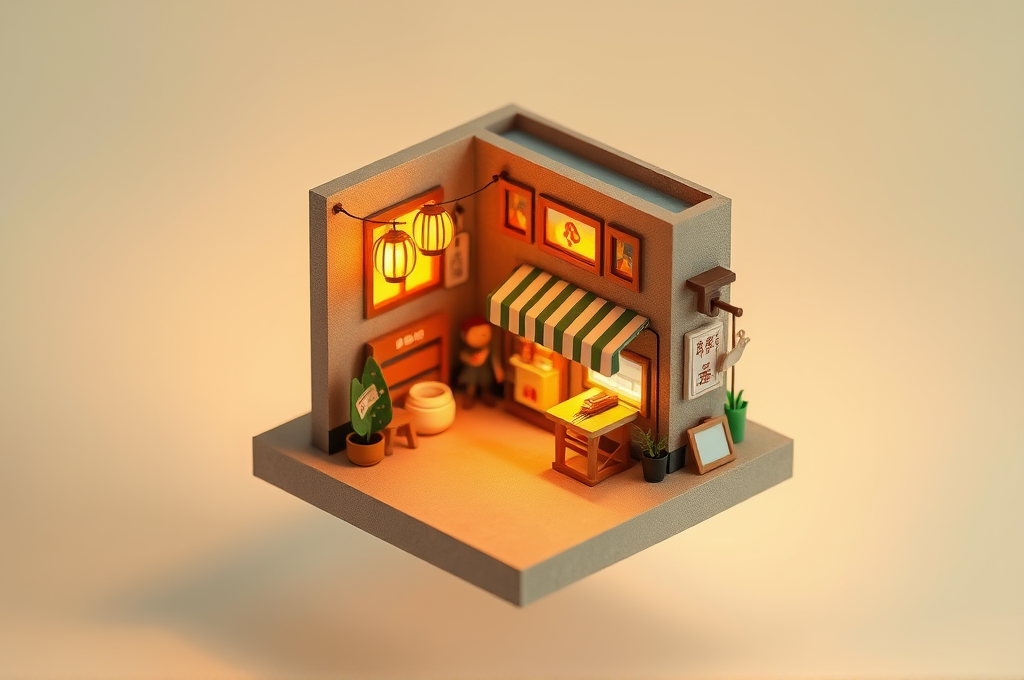
Isometric Miniature Diorama Design Prompt for Flux
Graphic designers, indie game studios, and social media brand managers use this prompt to produce eye-catching miniature-world visuals for app icons, product landing pages, and Instagram carousels. Illustrators and NFT artists get premium tilt-shift diorama scenes without building physical models. Marketing teams generate cohesive themed asset sets by swapping the central subject. The result is a polished, tactile 3D scene that feels handcrafted yet scalable across campaigns.
Create a hyper-detailed isometric miniature diorama presented as a tiny self-contained world floating on a soft neutral background. Render a [SUBJECT: cozy Japanese ramen alley] as a compact 3D cube-style scene viewed from a precise 35-degree isometric angle, corners perfectly aligned to a clean diagonal grid. Populate the diorama with tactile craft-model textures: matte painted cardboard, felt foliage, tiny sculpted clay figures, miniature glowing paper lanterns, brushed metal signage, and weathered wooden planks with visible grain. Use physically accurate scale-model detailing so the scene feels like a handcrafted tabletop set photographed in a professional product studio. Lighting: soft diffused key light from the upper left, gentle rim light for edge separation, and a subtle warm bounce fill to reveal texture depth. Include realistic soft shadows grounding the diorama on a smooth pastel gradient surface (choose mint, cream, or dusty rose). Add micro-details that reward close inspection: steam wisps, tiny reflections in puddles, glowing window interiors, dangling wires, potted plants, and scattered props. Color palette should be cohesive and slightly desaturated with one accent color pop. Emphasize tilt-shift miniature realism, crisp focus on the central structure, and gentle depth-of-field blur at the outer edges. Composition centered with generous negative space for a clean, gallery-like presentation. Style: 3D render, blender-quality, octane-inspired, product photography realism, playful yet premium. Negative prompt: flat 2D, cluttered background, harsh shadows, low detail, oversaturated, blurry textures, text artifacts. Technical params: --ar 1:1 --quality 2 --stylize 320 --chaos 8, render resolution 2048x2048, model flux-pro, guidance 3.5, steps 40, seed randomized for variation.
flux
#isometric#diorama
Tariq Abdullah
image
Miniature Diorama Tilt-Shift Macro Worlds — Firefly Prompt
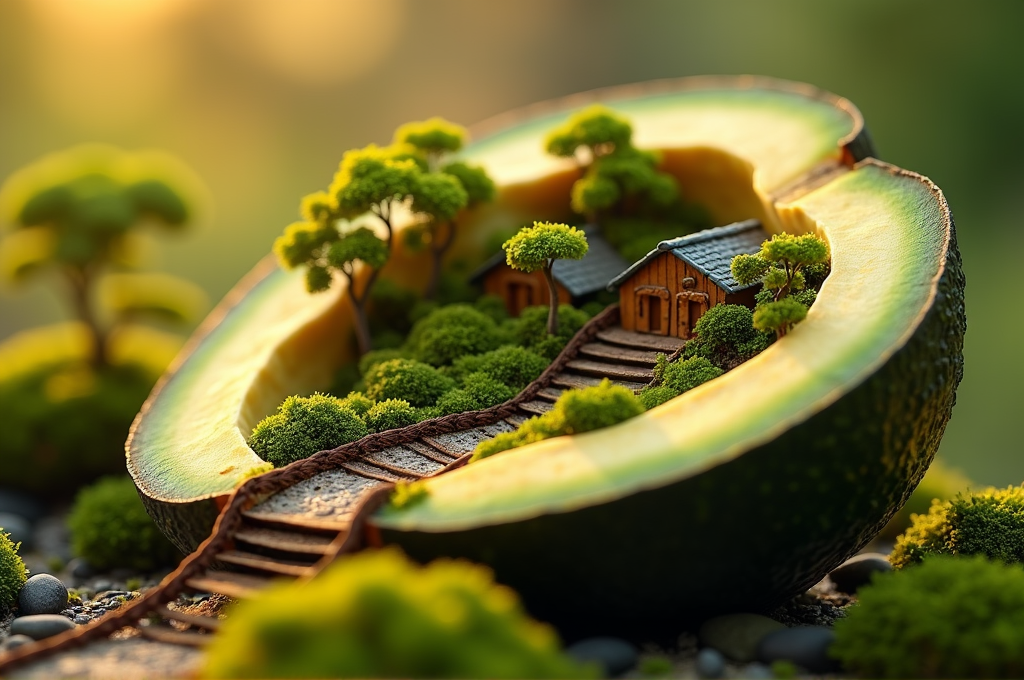
Social media creators, advertising designers, and food or product brands use this to produce scroll-stopping conceptual imagery that turns ordinary objects into magical worlds. The detailed tilt-shift and lighting instructions deliver believable scale and a polished commercial finish that a one-line prompt can't achieve. Marketers get versatile hero visuals for campaigns, packaging, and editorial content. It beats simple prompts by locking in realism, mood, and composition for consistent, repeatable results.
Create a hyper-realistic miniature diorama scene depicting a tiny world built inside an everyday object, photographed in dramatic tilt-shift macro style. Subject: a meticulously detailed miniature village of explorers, hikers, and tiny vehicles traversing a giant cracked-open avocado that becomes a lush green valley, with the pit transformed into a glowing golden spherical sun-temple at the center. Scatter miniature trees, moss pathways, rope bridges, and tiny lantern-lit campsites across the terrain. Style: photorealistic product-macro photography crossed with whimsical model-railroad craftsmanship, ultra-fine surface texture, visible fibers, dust particles, and realistic moisture droplets for scale realism. Lighting: soft warm golden-hour key light from the upper left, gentle rim lighting to separate figures, subtle volumetric god rays filtering through miniature trees, soft ambient bounce fill to reveal shadow detail. Composition: shallow depth of field with a strong tilt-shift blur gradient at top and bottom, sharp focus band across the central explorers, rule-of-thirds placement, slight low-angle hero perspective to make the tiny figures feel epic and monumental. Color palette: rich avocado greens, warm honey golds, soft cream highlights, and deep teal shadow accents for cinematic contrast. Mood: enchanting, adventurous, cozy, awe-inspiring sense of scale and wonder. Camera angle: close macro three-quarter view, eye-level with the miniature figures. Technical: shot on 100mm macro lens, f/2.8, crisp focus stacking on subjects, true-to-life materials, 8K ultra-detailed rendering, high dynamic range, professional studio-grade clarity, photoreal reflections. Emphasize the playful contrast between the giant real-world object and the believable tiny inhabitants. Aspect ratio 16:9, highly detailed, commercial-grade photography quality.
firefly
#miniature#tilt-shift
Priya Nair
art
Cinematic Anamorphic Portrait Flux Prompt for Film-Look Photos
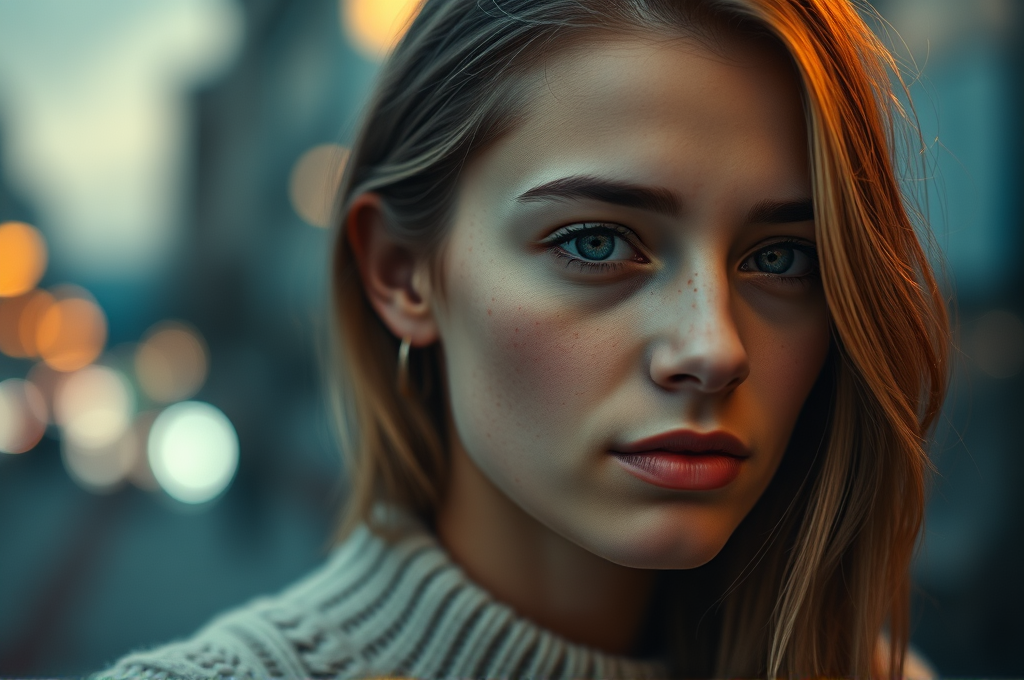
Portrait photographers, filmmakers building mood boards, and content creators use this to produce gallery-quality cinematic headshots without a studio or expensive anamorphic glass. The result is a film-still aesthetic with believable skin texture and pro color grading that reads as a frame from a movie rather than an obvious AI render. It beats a simple 'cinematic portrait' prompt because it specifies exact lighting direction, film stock behavior, lens artifacts, and color science that Flux needs to avoid plastic skin and flat lighting. Ideal for album covers, brand campaigns, and editorial concept work.
Ultra-realistic cinematic portrait of a young woman in her late twenties, captured as if shot on a vintage 35mm anamorphic film camera. She has natural, textured skin with visible pores, fine peach-fuzz, subtle freckles across the nose and cheeks, and softly glistening lips. Her expression is contemplative and emotionally intimate, eyes catching the light with a faint glassy reflection. She wears a simple oversized knit sweater in muted cream, with loose strands of hair framing her face. Lighting is dramatic and moody: a single soft key light from the left at 45 degrees creating gentle Rembrandt shadows, a faint warm rim light separating her hair from the background, and cool ambient fill filling the shadows. Color grade is rich teal-and-orange cinematic, deep blacks, lifted shadows, and creamy filmic highlights with subtle halation glow around bright areas. Composition follows a tight medium close-up, rule of thirds, eyes positioned on the upper third line, generous negative space on the right. Shallow depth of field with a creamy bokeh background of out-of-focus city bokeh lights in the blue hour. Anamorphic horizontal lens flares streak subtly across the frame, oval bokeh balls, slight lens vignette. Fine 35mm film grain, natural skin tones, photorealistic detail, sharp focus on the eyes. Mood is melancholic, cinematic, and intimate, evoking a still from an A24 indie drama. Shot at f/2.0, 85mm equivalent focal length, ISO 400 film stock aesthetic, golden-to-blue hour lighting. Hyperdetailed, professional color science, photographic realism. --ar 16:9
flux
#cinematic portrait#anamorphic
Dani Reyes
video
Matchstick Ignition Macro Slow-Motion Video Prompt for Flux
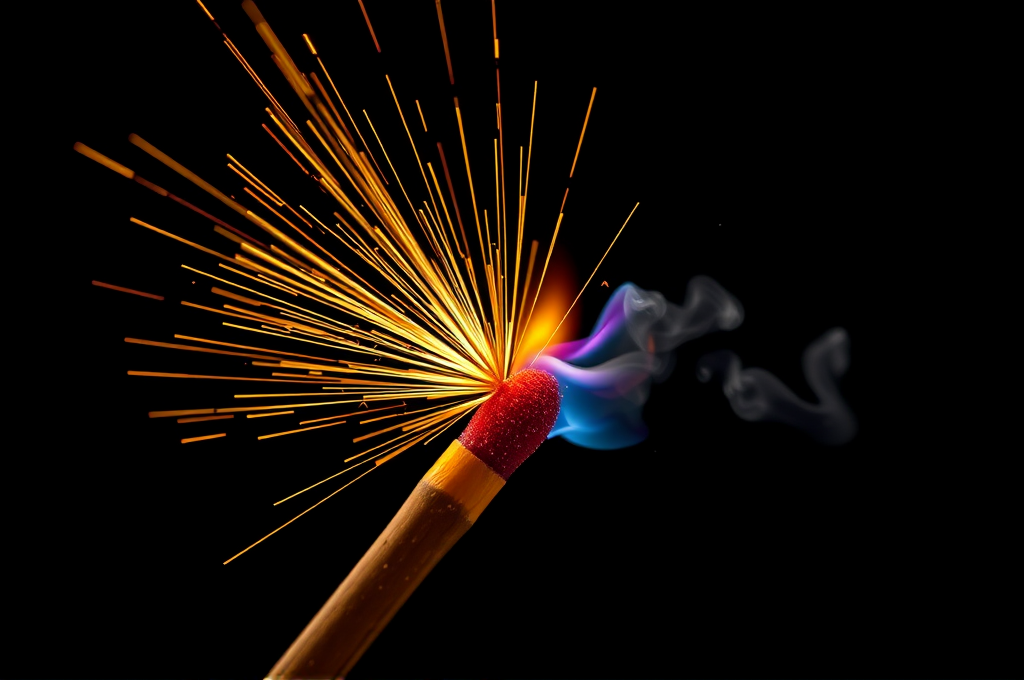
Commercial videographers and content creators use this prompt to produce striking opener clips for ads, product launches, and social reels where tension and transformation are themes. Motion designers repurpose the ignition moment for logo reveals and title sequences. Stock video sellers generate premium macro assets without a high-speed camera rig. The result is a hypnotic, broadcast-quality slow-motion fire clip that grabs attention in the first second.
Video generation prompt — hover to preview
flux
#macro video#slow motion
Aiko Sato