art
X-Ray Botanical Illustration Art Prompt for Stable Diffusion
Botanical artists, science communicators, and editorial illustrators use this prompt to create striking specimen-style visuals for prints, book covers, and educational content. Gallery curators and wellness brands love the ethereal glowing aesthetic for premium poster series and packaging. The result is a museum-quality x-ray botanical plate that feels both scientific and dreamlike. It works beautifully as wall art, textbook illustration, or luxury brand imagery.
Output Sample
The Prompt
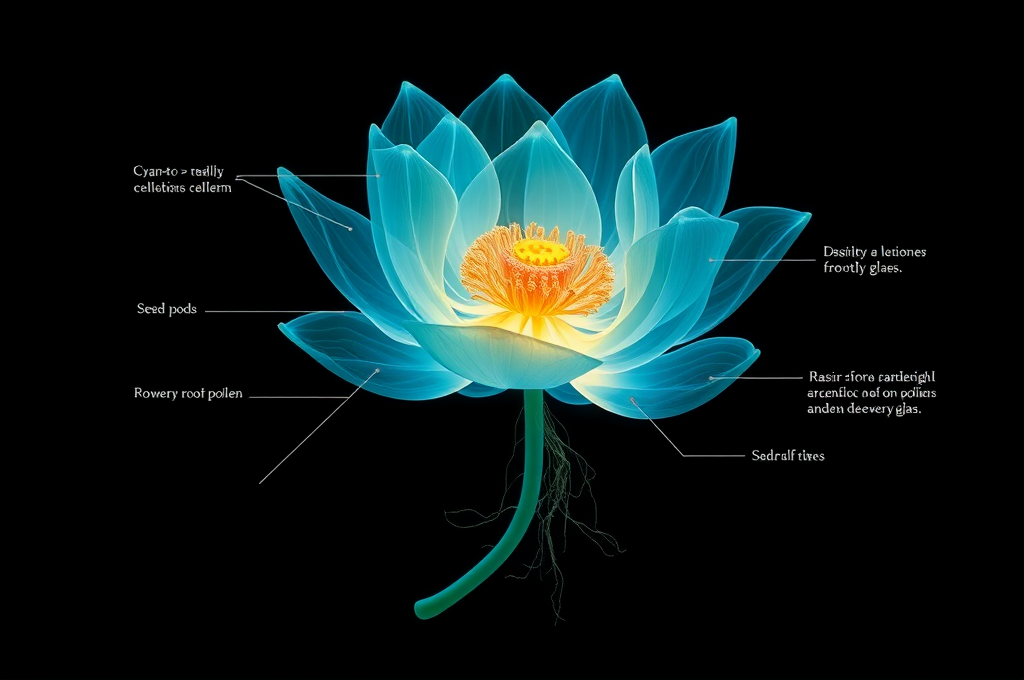
A hyper-detailed x-ray botanical illustration of a blooming lotus flower and its full stem, rendered as a translucent luminous specimen against a deep matte black background. Depict the internal structures glowing with soft bioluminescent light: visible veins, cellular networks, delicate root filaments, seed pods, and cross-sectioned petals revealing intricate inner architecture. Combine the precision of a vintage 19th-century scientific engraving with the ethereal quality of a modern medical x-ray scan. Use a cool cyan-to-teal luminescent palette with subtle warm amber highlights along the flower's core to create depth and focal contrast. Render fine linework and organic transparency so that overlapping structures show through one another like layered ghostly glass. Include elegant hand-labeled annotations in thin serif typography and small numbered callouts pointing to anatomical features, styled like an antique specimen plate. Add faint concentric grid marks and a subtle vignette to reinforce the laboratory-scan aesthetic. Emphasize razor-sharp micro-detail in the stamen, pollen grains, and vascular bundles, with delicate rim lighting tracing every edge. The overall composition should feel both scientific and magical — a specimen caught mid-glow. Ultra high resolution, museum-quality botanical plate, symmetrical vertical composition with generous negative space. Technical parameters: aspect ratio 2:3, sampler DPM++ 2M Karras, steps 40, CFG scale 7.5, resolution 832x1216, seed -1 for variation, hires fix upscale 2x with denoising 0.35, model SDXL 1.0 with a botanical or scientific-illustration LoRA weighted at 0.6. Negative prompt: blurry, low detail, oversaturated, cartoonish, flat lighting, watermark, text errors, distorted anatomy, jpeg artifacts, cluttered background, harsh neon.
How to use
- Copy the prompt above using the copy button
- Replace any [bracketed placeholders] with your details
- Paste into stable-diffusion
- Adjust and iterate based on the result
Shared by
Hana Yoshida
Illustrator and manga artist who experiments with Niji Journey prompts. Based in Kyoto. Tea ceremony enthusiast.
Works With
stable-diffusion
Details
Categoryart
AddedAug 17, 2026
Shared by
Hana Yoshida
Illustrator and manga artist who experiments with Niji Journey prompts. Based in Kyoto. Tea ceremony enthusiast.
Ready to use this?
Copy and paste directly into your AI tool.
Community Reviews
You might also like
art
Stained Glass Portrait Art Prompt for Stable Diffusion
Digital artists, illustrators, and print-on-demand sellers use this prompt to create striking decorative portraits, poster art, and wall prints. Interior designers and greeting card makers generate ornate stained glass motifs for spiritual, wedding, and memorial products. The result is a richly colored, luminous composition that mimics real cathedral glasswork with crisp lead lines and glowing jewel tones. It works equally well for portraits, animals, botanicals, and abstract mandala designs.
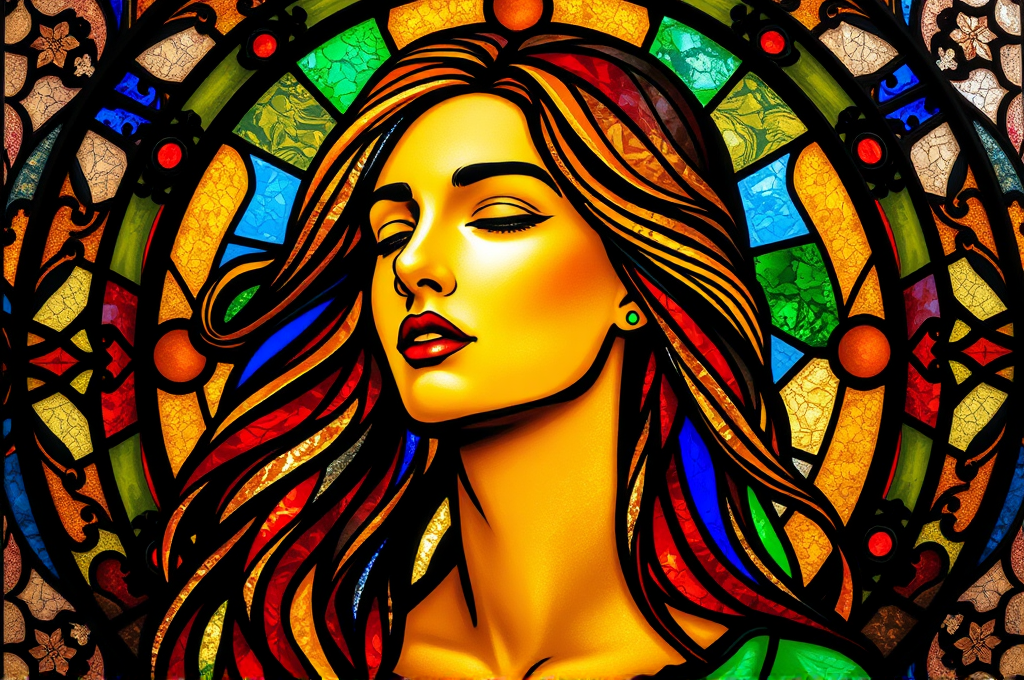
A luminous stained glass portrait of a serene woman with flowing hair, rendered as an intricate cathedral window composition. Every element is constructed from hand-cut colored glass panels separated by bold black lead came lines that trace every contour with confident, flowing linework. The glass segments glow with jewel tones — deep sapphire blues, ruby reds, emerald greens, amber golds, and amethyst purples — each panel showing subtle textural variation, seedy bubbles, and hand-blown imperfections that catch and refract light. Strong backlighting radiates through the translucent glass, making colors saturate and bloom, casting soft colored light spill across the composition. The design features geometric borders, radiating art nouveau floral motifs, and ornamental filigree framing the central figure. Highlights gleam on the polished glass surfaces while lead lines remain matte and dark, creating crisp separation between color fields. Background includes abstract mosaic patterns of smaller glass tiles arranged in concentric arcs. The overall mood is sacred, ornate, and radiant, evoking Tiffany and gothic cathedral craftsmanship fused with modern illustration clarity. Symmetrical balanced composition, decorative and reverent atmosphere, high detail throughout. Rich color harmony, painterly light transmission, museum-quality artisan craftsmanship. Style: stained glass art, cathedral window, art nouveau, Tiffany glass, mosaic illustration. Technical parameters: Model: SDXL 1.0 or Juggernaut XL Steps: 35 CFG scale: 7.5 Sampler: DPM++ 2M Karras Resolution: 832x1216 (portrait) Seed: -1 (randomize) Negative prompt: blurry, low contrast, flat lighting, photorealistic skin, washed out colors, muddy tones, broken glass, distorted lead lines, extra fingers, watermark, text, jpeg artifacts, dull, grayscale. Tip: increase CFG to 8.5 for bolder lead lines, or add 'volumetric backlight, god rays' to intensify the glow effect.
stable-diffusion
#stained glass#portrait art
Ryan O'Sullivan
art
Ukiyo-e Woodblock Print Art Prompt for Stable Diffusion
Digital artists, illustrators, and print-on-demand sellers use this prompt to create authentic-looking Japanese woodblock art for posters, apparel, and gallery collections. Content creators and brands leverage it for culturally-inspired marketing visuals and album covers. The flat, decorative style also works beautifully for book illustrations and editorial spreads. Results are elegant, timeless prints that blend traditional Edo aesthetics with any modern or classic subject.
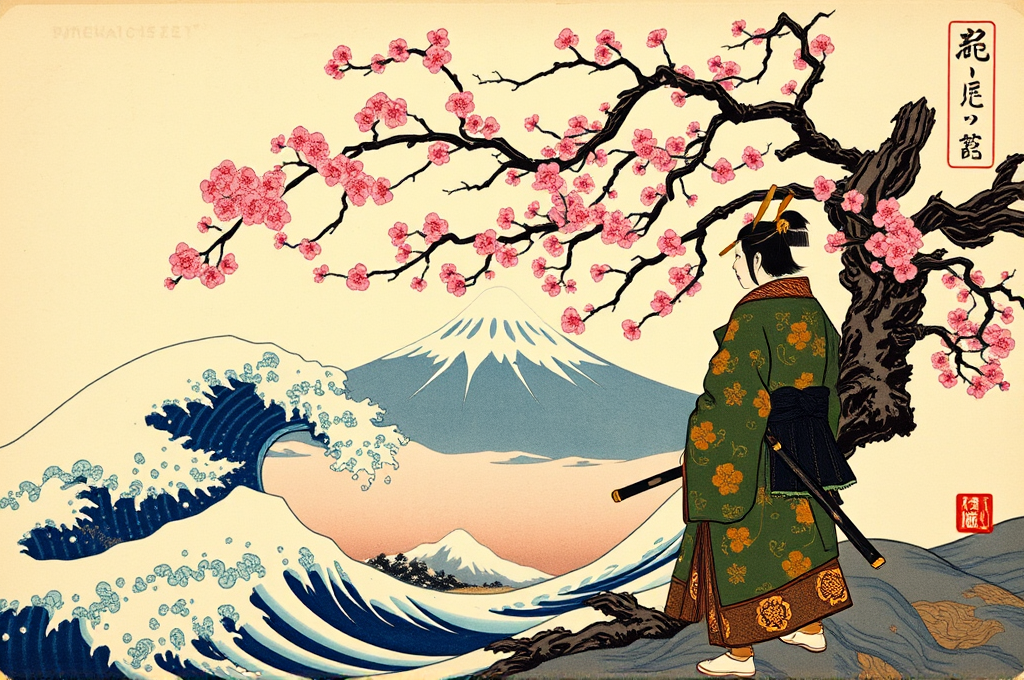
A masterful ukiyo-e woodblock print in the traditional Japanese Edo-period style, depicting [SUBJECT: e.g., a lone samurai standing beneath a windswept cherry blossom tree] rendered with bold flowing outlines and flat planes of layered color. Capture the authentic hand-carved aesthetic with visible ink registration, subtle wood grain texture bleeding through the paper, and the characteristic slight color misalignment of nishiki-e polychrome printing. Compose the scene with strong asymmetrical balance and generous negative space, inspired by the works of Hokusai, Hiroshige, and Utamaro. Use a muted yet luminous palette of indigo blue, vermilion red, ochre yellow, moss green, and soft sumi black, with delicate gradient bokashi shading across the sky and water. Include stylized clouds, cresting waves, and distant mountains layered in atmospheric perspective. Add a decorative border and an authentic-looking calligraphic title cartouche and artist's seal (hanko) in the corner. The paper should appear as aged washi with a warm cream tone and fine fibrous texture. Emphasize elegant linework, decorative pattern detailing in fabrics and foliage, and a serene, contemplative mood. Flat lighting with no harsh shadows, honoring the two-dimensional print tradition. High detail, museum-quality reproduction, ornamental and refined. Negative prompt: photorealism, 3D render, harsh shadows, gradient smoothness, western oil painting, blurry, low detail, modern digital gloss, watermark, distorted anatomy, oversaturation, plastic texture. Technical parameters: Steps: 35, Sampler: DPM++ 2M Karras, CFG scale: 7.5, Resolution: 832x1216 (portrait) or 1216x832 (landscape), Model: SDXL 1.0 or Juggernaut XL, Clip skip: 2, Denoising: 0.5 for img2img refinement. Recommended LoRA: 'Ukiyo-e Woodblock Style' at weight 0.7-0.9.
stable-diffusion
#ukiyo-e#woodblock print
Leila Ahmadi
art
Glowing Botanical X-Ray Fruit Cross-Section Art for SD
Digital artists, science communicators, and botanical illustrators use this prompt to create striking educational and decorative imagery. Food brands and wellness companies leverage it for premium packaging, posters, and social media content. Interior designers print these as gallery-style wall art for modern kitchens and labs. The result is a luminous, scientifically-inspired artwork that balances aesthetic drama with anatomical accuracy.
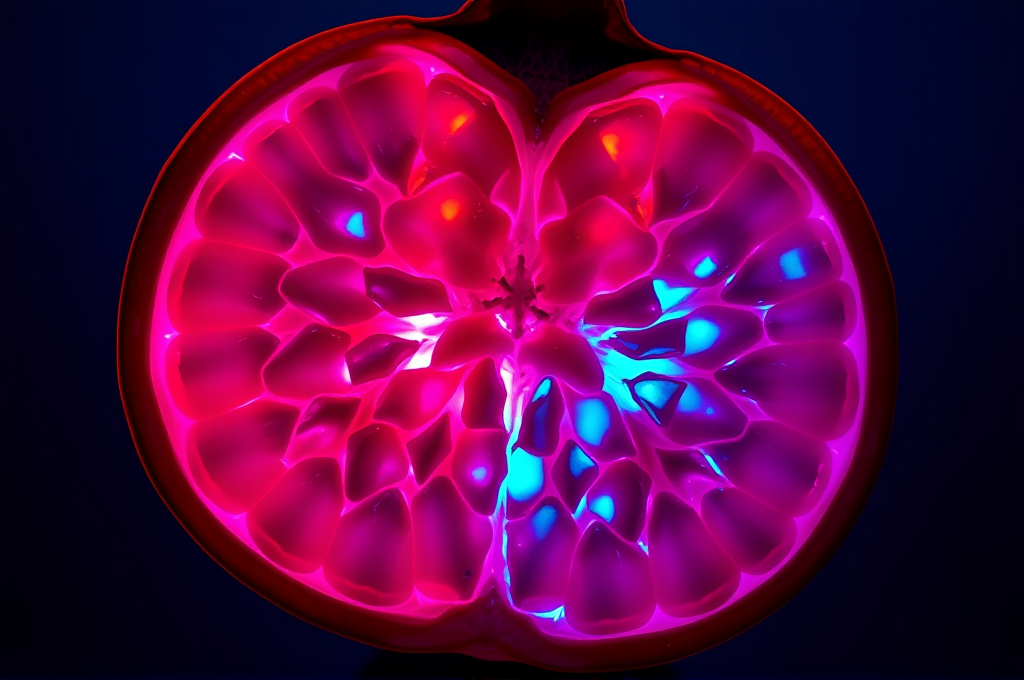
A hyper-detailed botanical X-ray cross-section of a ripe pomegranate, sliced perfectly in half to reveal translucent, glowing seed chambers. Each individual aril shimmers with internal luminescence, casting soft radiant light through the membrane walls. The entire fruit appears rendered in an ethereal X-ray style: bones-of-botany aesthetic, where cellular structures, veins, and fibrous strands are visible like intricate biological circuitry. Deep indigo and midnight-black background to maximize contrast against the neon-magenta, amber, and bioluminescent-teal internal glow. Render as scientific illustration meets fine art, combining the precision of a botanical textbook plate with the dramatic lighting of modern digital art. Composition: centered subject, macro focus, symmetrical cut, shallow depth of field with crisp edge definition. Lighting: internal subsurface scattering, backlit translucency, volumetric glow emanating from within the fruit, subtle rim light tracing the outer skin. Texture: show micro-details — seed clusters, fibrous pith, delicate juice vesicles, cellular membranes with semi-transparent layering. Color palette: electric magenta, radioactive amber, emerald bioluminescence, deep violet shadows. Style influences: medical X-ray imaging, Ernst Haeckel botanical plates, cyberpunk neon, scientific infographic clarity. Add faint anatomical annotation lines and measurement ticks for an authentic scientific-diagram feel, kept minimal and elegant. Ultra-sharp, 8K resolution, hyperrealistic rendering. Technical parameters: Steps: 35, Sampler: DPM++ 2M Karras, CFG scale: 7.5, Resolution: 1024x1024 (or 832x1216 portrait), Seed: random, Model: SDXL 1.0 or Juggernaut XL. Negative prompt: blurry, low-contrast, flat lighting, washed out colors, cartoonish, oversaturated noise, watermark, text artifacts, dull background, distorted anatomy, extra fruit, cluttered composition.
stable-diffusion
#botanical xray#fruit cross-section
Leila Ahmadi
art
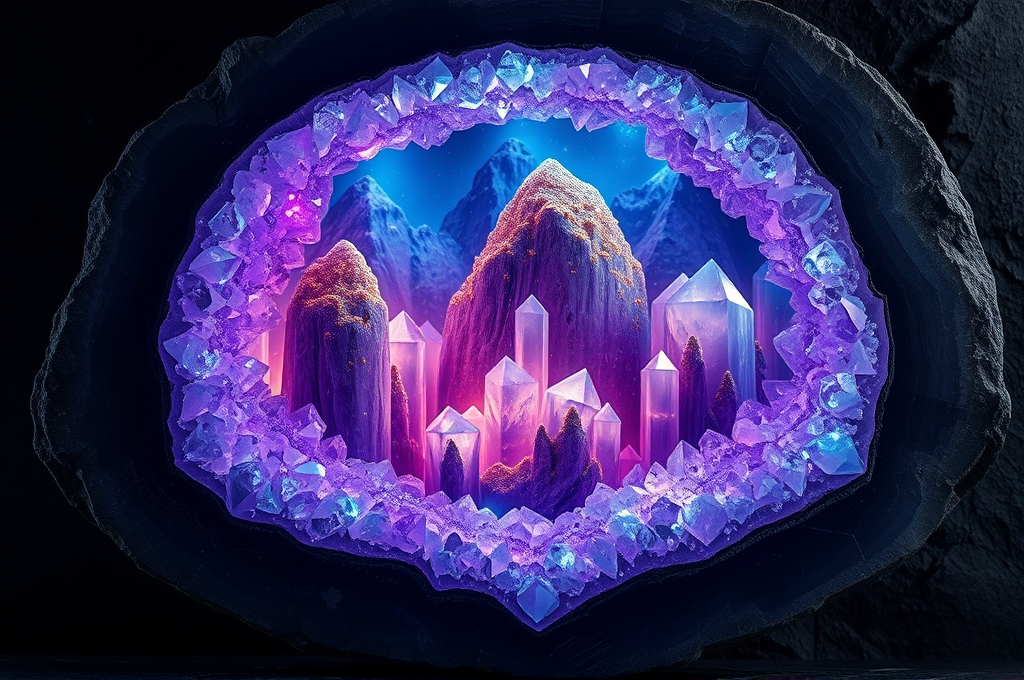
Crystal Geode Fantasy Landscape Art Prompt for Leonardo
Digital artists, fantasy illustrators, and concept designers use this prompt to create eye-catching surreal landscapes for prints, book covers, and album art. Meditation apps and wellness brands leverage the mystical crystal aesthetic for calming visuals and backgrounds. Content creators and NFT artists generate unique jewel-toned pieces that stand out on social feeds. The result is a magical, high-detail image that blends geology with fantasy worldbuilding.
Create a hyper-detailed macro fantasy artwork depicting the cross-section of a massive amethyst geode that reveals an entire surreal landscape hidden within its crystalline cavity. The rough, earthy outer shell of the geode frames the scene like a natural rock window, with mineral veins and rugged stone textures contrasting against the dazzling interior. Inside, towering amethyst and quartz crystals rise like translucent mountains, catching and refracting light into prismatic rainbows across the cavern walls. Nestle a tiny glowing fantasy world within: bioluminescent pools of liquid mineral, miniature crystal forests, and soft drifting mist that catches shafts of volumetric light. Use a rich jewel-toned palette of deep purples, violets, soft pinks, and icy blues, accented with golden druzy sparkle along the crystal edges. Light should feel internal and magical, as if the crystals themselves emit a gentle glow, creating dramatic chiaroscuro and luminous highlights. Render with photorealistic mineral textures, intricate refractions, caustic light scattering, and ultra-sharp crystalline facets. Compose the image with the geode centered, using a shallow depth of field that keeps the inner landscape in crisp focus while softly blurring the stone edges. The mood should be mystical, serene, and otherworldly, blending natural geology with dreamlike fantasy. Emphasize depth, scale, and the sense of discovering a secret universe inside a rock. Style: cinematic concept art meets macro photography, highly detailed, 8K resolution. Technical params: aspect ratio 3:2, Leonardo Phoenix or Lucid Realism model, guidance scale 7, generation quality high, Alchemy on, contrast high, PromptMagic v3 enabled, 1536x1024, negative prompt: blurry, flat lighting, dull colors, low detail, distorted facets, oversaturated noise.
leonardo
#crystal geode#fantasy landscape
Priya Patel