Search results for "3D render"
12 results found
Design
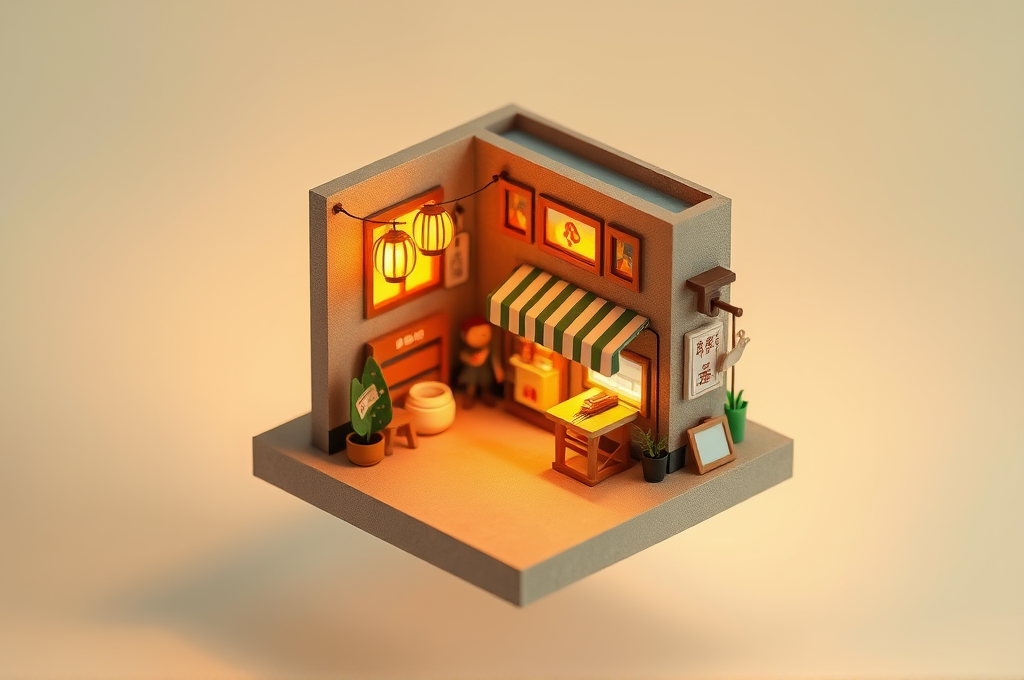
Isometric Miniature Diorama Design Prompt for Flux
Graphic designers, indie game studios, and social media brand managers use this prompt to produce eye-catching miniature-world visuals for app icons, product landing pages, and Instagram carousels. Illustrators and NFT artists get premium tilt-shift diorama scenes without building physical models. Marketing teams generate cohesive themed asset sets by swapping the central subject. The result is a polished, tactile 3D scene that feels handcrafted yet scalable across campaigns.
Create a hyper-detailed isometric miniature diorama presented as a tiny self-contained world floating on a soft neutral background. Render a [SUBJECT: cozy Japanese ramen alley] as a compact 3D cube-style scene viewed from a precise 35-degree isometric angle, corners perfectly aligned to a clean diagonal grid. Populate the diorama with tactile craft-model textures: matte painted cardboard, felt foliage, tiny sculpted clay figures, miniature glowing paper lanterns, brushed metal signage, and weathered wooden planks with visible grain. Use physically accurate scale-model detailing so the scene feels like a handcrafted tabletop set photographed in a professional product studio. Lighting: soft diffused key light from the upper left, gentle rim light for edge separation, and a subtle warm bounce fill to reveal texture depth. Include realistic soft shadows grounding the diorama on a smooth pastel gradient surface (choose mint, cream, or dusty rose). Add micro-details that reward close inspection: steam wisps, tiny reflections in puddles, glowing window interiors, dangling wires, potted plants, and scattered props. Color palette should be cohesive and slightly desaturated with one accent color pop. Emphasize tilt-shift miniature realism, crisp focus on the central structure, and gentle depth-of-field blur at the outer edges. Composition centered with generous negative space for a clean, gallery-like presentation. Style: 3D render, blender-quality, octane-inspired, product photography realism, playful yet premium. Negative prompt: flat 2D, cluttered background, harsh shadows, low detail, oversaturated, blurry textures, text artifacts. Technical params: --ar 1:1 --quality 2 --stylize 320 --chaos 8, render resolution 2048x2048, model flux-pro, guidance 3.5, steps 40, seed randomized for variation.
flux
#isometric#diorama
Tariq Abdullah
Design
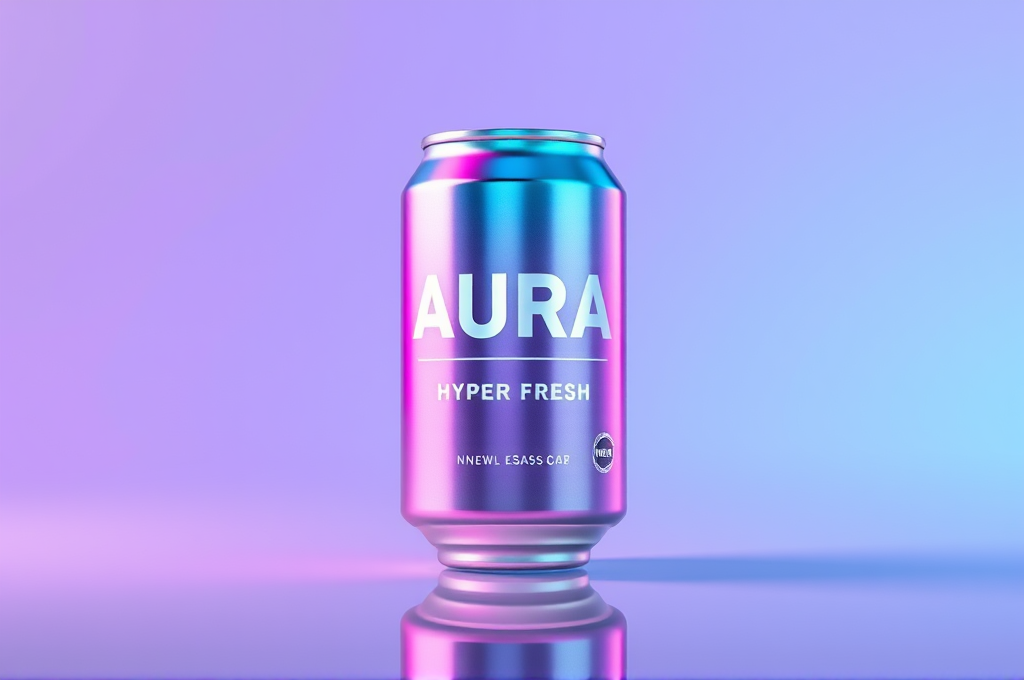
Y2K Chrome Metallic Packaging Design Prompt for Ideogram
Brand designers, packaging studios, and e-commerce founders use this to prototype eye-catching product packaging without a full photoshoot. Marketing teams generate scroll-stopping hero images for beverage, cosmetic, or tech-lifestyle launches. Freelancers pitch clients faster with polished chrome-aesthetic concepts. The result is a premium, text-accurate packaging mockup ready for social ads or moodboards.
Design a premium product packaging mockup rendered in a Y2K chrome-metallic aesthetic, presented on a clean studio background. The hero element is a modern beverage can (or cosmetic bottle) featuring a bold liquid-chrome logo with the exact text 'AURA' spelled clearly in a heavy geometric sans-serif, wrapped in a glossy iridescent finish that reflects soft pink, cyan, and silver highlights. Surround the primary text with secondary tagline text reading 'HYPER FRESH' in a smaller condensed uppercase font, kerned tightly for a futuristic feel. Composition: front-facing product centered using the rule of thirds, floating slightly above a reflective surface with a subtle mirrored shadow. Materials should look like polished liquid metal, brushed aluminum accents, and holographic foil, with crisp specular reflections and smooth gradient ramps from deep blue to warm silver. Lighting is high-key studio lighting with two soft boxes creating clean edge highlights and a gentle rim light to define the metallic curvature. Background is a minimalist gradient of pale lavender to icy blue with faint lens-flare glints. Include tiny UI-style graphic elements: a barcode, a small circular seal reading 'NEW', and a metallic drip motif along the bottom. Emphasize legible, well-spaced typography with accurate letterforms — no distorted or gibberish text. Style keywords: Y2K revival, chrome typography, product photography, iridescent, futuristic branding, clean vector-meets-3D render. Aspect ratio 4:5 for social commerce. Render in ultra-high resolution with sharp focus, photorealistic reflections, and a polished commercial finish suitable for a real product launch.
ideogram
#y2k design#chrome typography
Maya Chen
Design
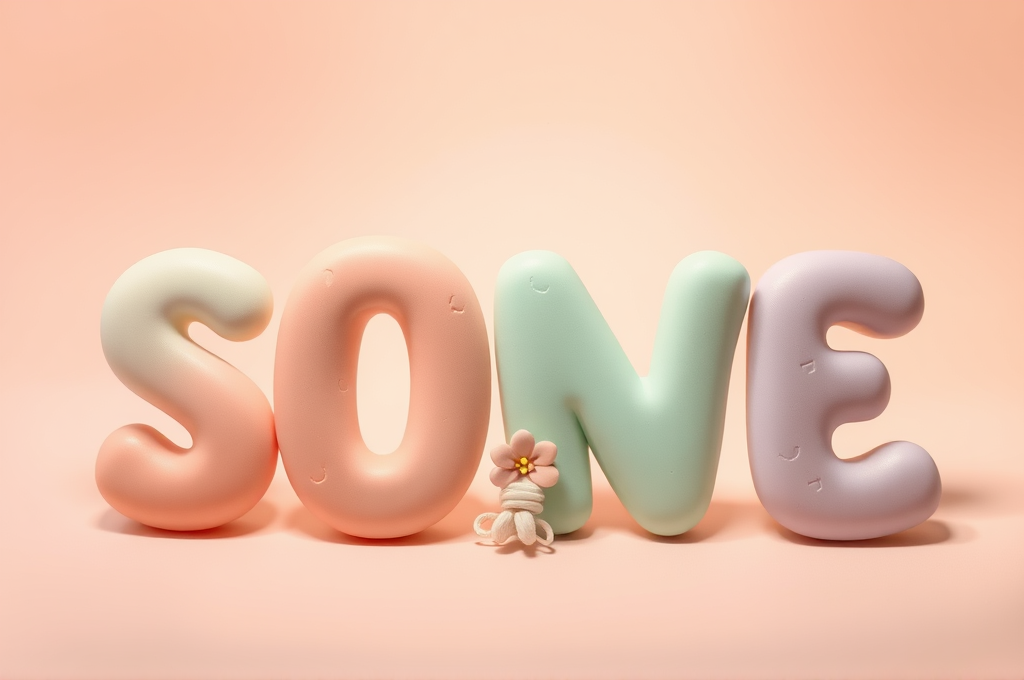
Claymorphism 3D Typography Design Prompt for Leonardo
Brand designers, social media marketers, and packaging creators use this prompt to produce eye-catching playful typography for product launches, kids' brands, food packaging, and app onboarding screens. The result is a warm, tactile, premium clay-style word treatment that instantly feels approachable and modern. It works especially well for Instagram carousels, hero banners, and merchandise mockups. Studios can swap the word and color palette to fit any brand while keeping the trending claymorphism look.
Create a playful, premium claymorphism-style 3D typography design featuring the word 'BLOOM' rendered as soft, hand-molded clay letters. Each letter should appear sculpted from smooth matte plasticine with rounded, chubby edges, subtle fingerprint textures, and gentle surface imperfections that reveal the handmade origin. Use a pastel color palette of soft coral, buttery cream, mint green, and lavender, with each letter in a slightly different hue for a cheerful candy-like feel. Arrange the letters in a bold, centered composition with a shallow depth of field, letting the front letters stay crisp while the background softly blurs. Light the scene with a large, soft key light from the upper left and a gentle fill from the right, producing smooth wraparound shadows, subtle ambient occlusion in the crevices, and delicate soft-edged contact shadows beneath each letter. Add tiny decorative clay elements—rolled beads, small flowers, or a coiled squiggle—nestled around the letters to enhance the tactile handmade charm. The background should be a seamless pastel gradient studio backdrop (soft peach fading to warm white) that keeps focus on the typography. Emphasize a squishy, satisfying, toy-like material response with a matte non-reflective finish and high micro-detail. Style keywords: claymorphism, plasticine typography, soft 3D render, kawaii pastel, tactile clay, studio product photography, premium playful branding. Render in ultra-high resolution with photoreal clay materials, crisp macro detail on the front letters, and a warm inviting mood. Technical params: aspect ratio 4:5, Leonardo Phoenix or Diffusion XL model, PhotoReal enabled, Alchemy on, guidance scale 7, high contrast off, resolution 1024x1280, negative prompt: glossy plastic, harsh shadows, text errors, extra letters, low detail, blurry front subject.
leonardo
#claymorphism#3d typography
Liam Brennan
Design
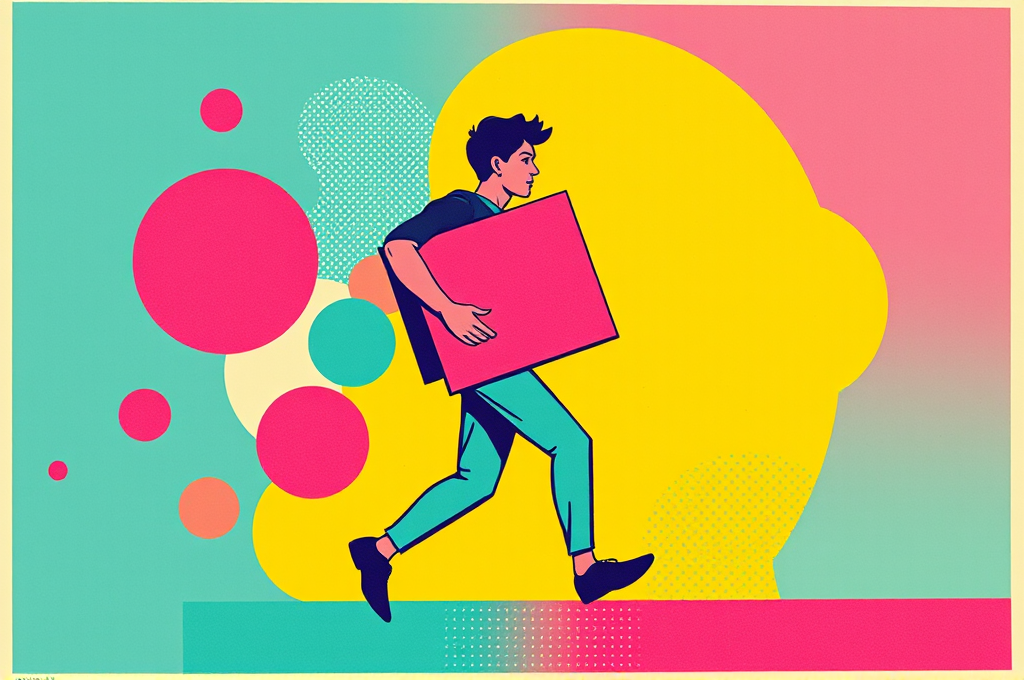
Risograph Overprint Poster Design Prompt for Stable Diffusion
Graphic designers, illustrators, and indie studios use this prompt to generate eye-catching poster concepts, album covers, event flyers, and zine spreads with an authentic analog print look. It saves hours of manual texture layering and misregistration effects that normally require Photoshop or a real riso machine. Marketers and small brands get trendy, tactile visuals that stand out from clean corporate design. The result is a handmade, boutique print aesthetic that feels premium and culturally on-trend.
Design a striking risograph-style print poster with authentic overprint aesthetics. Compose a bold, editorial layout featuring a central subject — a stylized human figure mid-stride carrying a large geometric shape — surrounded by abstract organic blobs, halftone dot gradients, and hand-drawn linework. Render it in a limited spot-color palette of fluorescent pink, teal, and marigold yellow, using multiplied overprint blending where colors overlap to create rich, unexpected secondary tones. Emphasize the signature risograph imperfections: visible ink misregistration with 2-4px layer offset, grainy paper texture, slight color banding, uneven ink coverage with lighter patches, and a soft matte finish on off-white recycled paper stock. Incorporate coarse halftone screens at roughly 45-degree angles for shading rather than smooth gradients. Add minimalist bold typography in a chunky grotesque sans-serif for a headline, with subtle roughened edges. Keep negative space generous and the layout asymmetric but balanced, following a strong grid. The overall mood should feel handmade, energetic, and analog — like a limited-run gig poster or art-book cover from a boutique print studio. Style keywords: risograph print, riso overprint, spot color, halftone texture, screen print aesthetic, indie zine, grainy ink, misregistration. Avoid photorealism, glossy finishes, and smooth digital gradients. Emphasize tactile, imperfect, print-based charm. Negative prompt: photorealistic, 3D render, smooth gradients, glossy, high detail skin, blurry, watermark, jpeg artifacts, perfectly aligned registration, drop shadows, gradient mesh. Recommended settings: Stable Diffusion XL, sampler DPM++ 2M Karras, steps 30-35, CFG scale 7, resolution 832x1216 (portrait poster), seed varied for layout diversity, optional LoRA for halftone or screenprint texture at 0.6 weight.
stable-diffusion
#risograph#poster design
Emma Laurent
Design
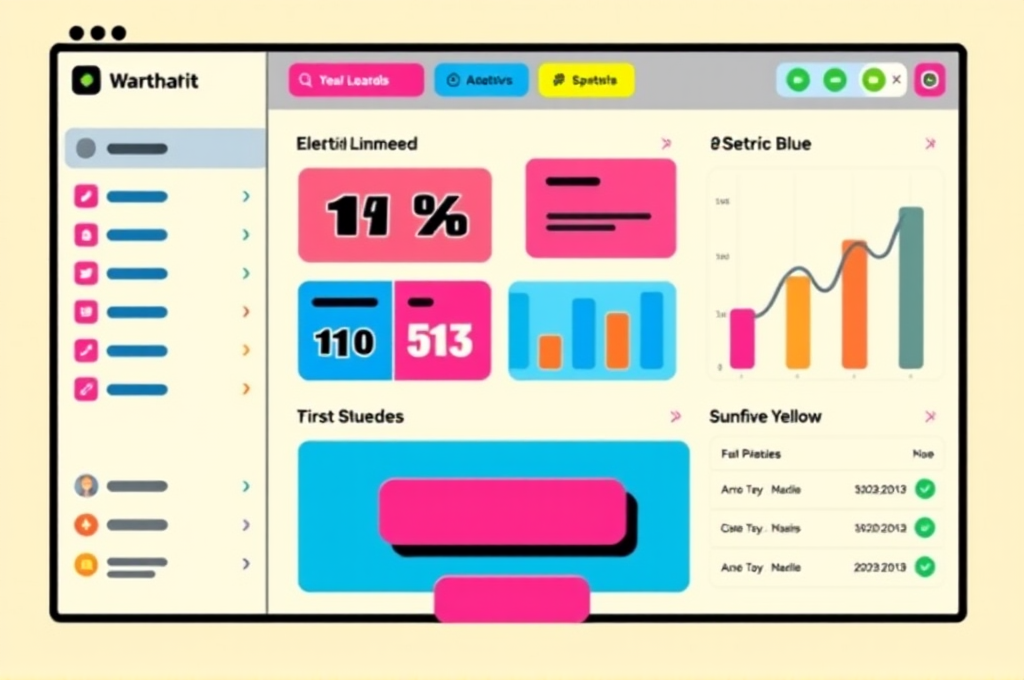
Neo-Brutalist UI Design Prompt for Stable Diffusion Apps
UI/UX designers, indie developers, and design agencies use this prompt to rapidly generate neo-brutalist interface mockups for pitches, moodboards, and landing pages. The result is a bold, trend-forward dashboard concept that stands out from generic minimalist designs. Startups building distinctive brand identities can prototype app screens in seconds. It's ideal for Dribbble portfolios, client presentations, and design inspiration boards.
A high-fidelity neo-brutalist user interface design mockup for a modern SaaS dashboard, showcasing bold and unapologetic visual language. Feature thick solid black borders (3-5px) around every element, hard-edged offset drop shadows (no blur, pure black, 6px offset), and raw flat color blocks in a vibrant retro palette: electric lime green, hot pink, cobalt blue, warm cream, and sunflower yellow. Include oversized chunky sans-serif typography with heavy weights, using fonts reminiscent of Archivo Black or Space Grotesk. Layout comprises a top navigation bar, sidebar menu with icon buttons, a main content area with stat cards, data tables, and rounded rectangular buttons with visible borders. Add subtle skeuomorphic touches like flat toggle switches and pill-shaped tags. The composition should feel structured yet playful, embracing intentional asymmetry and generous whitespace. Elements sit on a light cream or off-white background (#F5F1E8) to make the colored blocks pop. Include a call-to-action button in hot pink with black border and hard shadow. Design must look production-ready, clean vector illustration style, flat design with zero gradients, crisp geometric shapes, high contrast, sharp corners mixed with slightly rounded card edges. Perfect pixel alignment, balanced grid layout, modern web app aesthetic 2024. Negative prompt: gradients, soft shadows, blur, glassmorphism, photorealism, 3d render, cluttered, low contrast, muddy colors, watermark, text errors, distorted typography, realistic lighting. Technical params: Steps: 35, CFG scale: 7.5, Sampler: DPM++ 2M Karras, Resolution: 1344x768, Seed: random, Model: SDXL 1.0 or Juggernaut XL, Style preset: flat vector / digital art. Use hires fix at 1.5x upscale with 0.4 denoising for crisp edges.
stable-diffusion
#neo-brutalism#ui design
Rosa Bernardo
art
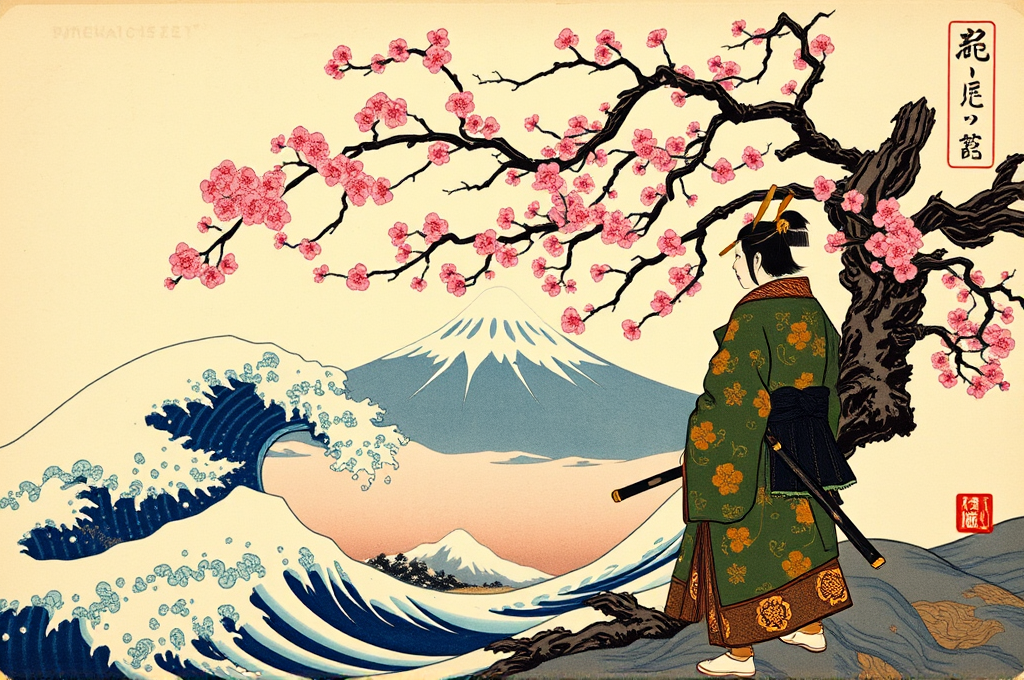
Ukiyo-e Woodblock Print Art Prompt for Stable Diffusion
Digital artists, illustrators, and print-on-demand sellers use this prompt to create authentic-looking Japanese woodblock art for posters, apparel, and gallery collections. Content creators and brands leverage it for culturally-inspired marketing visuals and album covers. The flat, decorative style also works beautifully for book illustrations and editorial spreads. Results are elegant, timeless prints that blend traditional Edo aesthetics with any modern or classic subject.
A masterful ukiyo-e woodblock print in the traditional Japanese Edo-period style, depicting [SUBJECT: e.g., a lone samurai standing beneath a windswept cherry blossom tree] rendered with bold flowing outlines and flat planes of layered color. Capture the authentic hand-carved aesthetic with visible ink registration, subtle wood grain texture bleeding through the paper, and the characteristic slight color misalignment of nishiki-e polychrome printing. Compose the scene with strong asymmetrical balance and generous negative space, inspired by the works of Hokusai, Hiroshige, and Utamaro. Use a muted yet luminous palette of indigo blue, vermilion red, ochre yellow, moss green, and soft sumi black, with delicate gradient bokashi shading across the sky and water. Include stylized clouds, cresting waves, and distant mountains layered in atmospheric perspective. Add a decorative border and an authentic-looking calligraphic title cartouche and artist's seal (hanko) in the corner. The paper should appear as aged washi with a warm cream tone and fine fibrous texture. Emphasize elegant linework, decorative pattern detailing in fabrics and foliage, and a serene, contemplative mood. Flat lighting with no harsh shadows, honoring the two-dimensional print tradition. High detail, museum-quality reproduction, ornamental and refined. Negative prompt: photorealism, 3D render, harsh shadows, gradient smoothness, western oil painting, blurry, low detail, modern digital gloss, watermark, distorted anatomy, oversaturation, plastic texture. Technical parameters: Steps: 35, Sampler: DPM++ 2M Karras, CFG scale: 7.5, Resolution: 832x1216 (portrait) or 1216x832 (landscape), Model: SDXL 1.0 or Juggernaut XL, Clip skip: 2, Denoising: 0.5 for img2img refinement. Recommended LoRA: 'Ukiyo-e Woodblock Style' at weight 0.7-0.9.
stable-diffusion
#ukiyo-e#woodblock print
Leila Ahmadi
Design
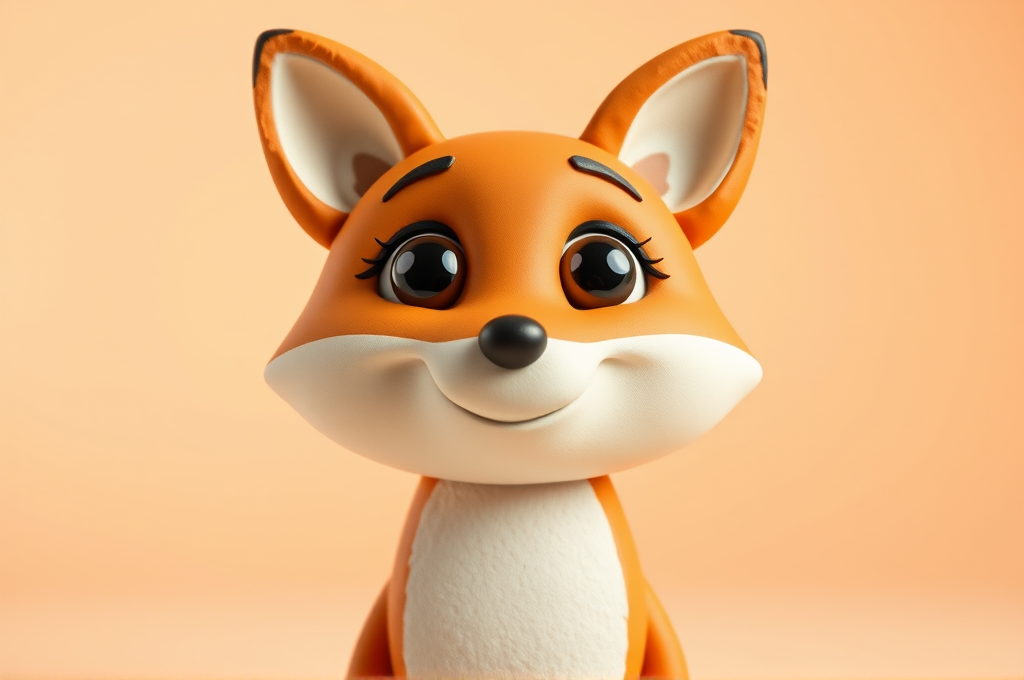
Claymation 3D Character Design Prompt for Flux Mascots
Brand designers and startup founders use this prompt to generate distinctive claymation-style mascots that feel warm and approachable without hiring a stop-motion studio. App developers create playful icon sets and onboarding characters that stand out in crowded marketplaces. Marketers produce scroll-stopping social content with a nostalgic handcrafted charm. The result is a cohesive, tactile character system usable across web, packaging, and app UI.
Create a charming claymation-style 3D character in the aesthetic of handcrafted stop-motion animation. Subject: a rounded, friendly mascot character [describe: e.g., a chubby orange fox, a smiling coffee cup, a sleepy robot] with visible thumbprint textures, subtle fingerprint indentations, and soft matte clay surfaces. The character should have exaggerated, expressive proportions — an oversized head, small stubby limbs, large glossy eyes with tiny catchlight reflections, and a warm, approachable smile. Material and surface: model everything in sculpted polymer clay with a slightly uneven, hand-shaped finish. Include micro-imperfections like tool marks, gentle seams where clay pieces join, and a soft velvety matte texture that catches light realistically. Avoid plastic-perfect smoothness — embrace the handmade organic feel. Lighting: three-point softbox studio setup with a large key light at 45 degrees, gentle fill light, and a subtle rim light to separate the character from the background. Warm color temperature around 5000K for an inviting mood. Add soft, believable contact shadows beneath the character to ground it. Background: clean seamless pastel backdrop (soft mint, peach, or butter yellow) with a smooth gradient and shallow depth of field for a professional product-shot feel. Optionally include a small clay prop or pedestal. Composition: centered hero framing, eye-level camera angle, character looking slightly toward the viewer for connection. Rich color palette with complementary tones. Style keywords: claymation, stop-motion, Aardman-inspired, tactile 3D render, cute mascot, handcrafted, playful, tilt-shift softness. Technical parameters: --ar 1:1 --style raw --stylize 250 --quality 2, render resolution 2048x2048, PBR clay shader, subsurface scattering enabled, 8k detail, octane-quality lighting.
flux
#claymation#character design
Owen Blackwood
Design
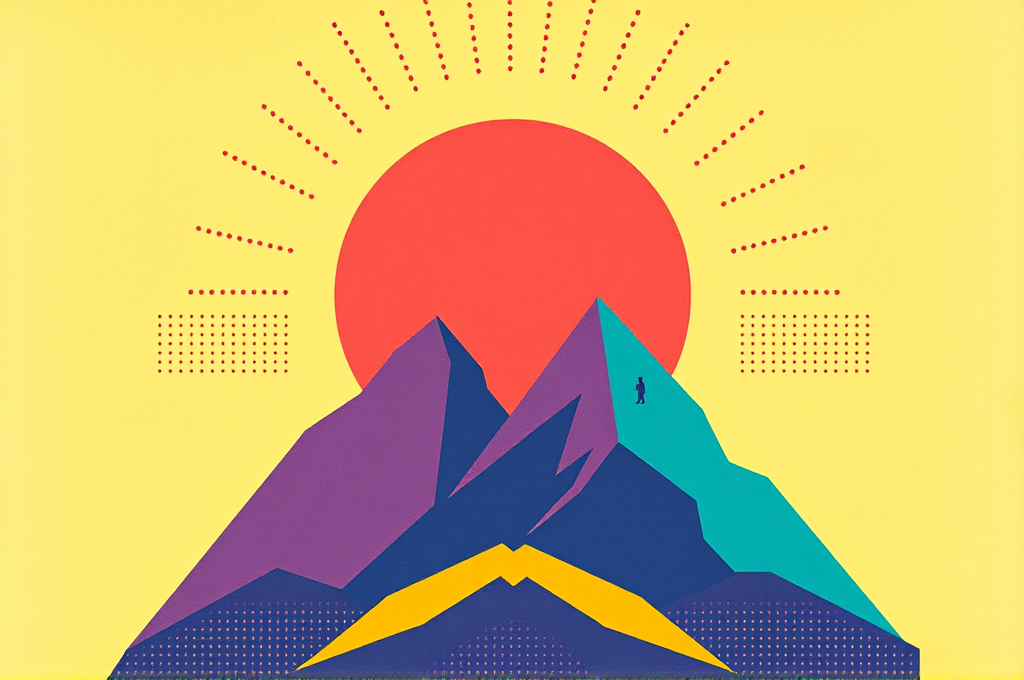
Risograph Retro Poster Design Prompt for Firefly
Graphic designers, indie brand studios, and marketing teams use this prompt to generate eye-catching event posters, album covers, and editorial layouts with authentic print texture. It delivers a distinctive handmade risograph look without needing a physical printer or expensive materials. Zine makers and social media designers get scroll-stopping visuals that feel analog and premium. The layout leaves clean space for adding custom headlines and campaign copy.
Create a bold retro-futuristic risograph-style poster design with the tactile charm of vintage print. The composition features a large central subject — a stylized geometric sun rising over an angular mountain range and a lone traveler silhouette — arranged with strong asymmetric balance and generous negative space. Render everything in the authentic aesthetic of a two-to-three color risograph print: overprinted spot inks, visible halftone dot patterns, slight misregistration where colors overlap creating unexpected third tones, and a soft grainy paper texture with subtle ink smudging at the edges. Use a limited palette of fluorescent pink, cobalt blue, and mustard yellow, letting overlaps produce muted purples and greens. Apply flat vector-like shapes with no gradients, only textured ink density variation to suggest depth. Include bold geometric sans-serif display typography for a placeholder headline area at the top, rendered as clean negative-space cutouts. Add fine linear elements, dotted grids, and retro starburst motifs to fill the background rhythm. The overall mood should feel handmade, nostalgic yet modern, evoking 1970s Japanese print culture fused with contemporary indie zine design. Emphasize crisp edges softened by print imperfection, high contrast between ink and unprinted paper, and a poster-ready vertical layout. Style: risograph print, screen-print texture, retro editorial, indie graphic design, flat illustration. Technical params — Aspect ratio: 2:3 (portrait poster), Resolution: 2048x3072, Content type: Art, Style strength: 85, Visual intensity: high, Color emphasis: fluorescent pink / cobalt blue / mustard yellow, Effects: grain heavy, halftone dots, ink misregistration. Avoid: photorealism, smooth gradients, 3D rendering, glossy surfaces, more than four colors, realistic lighting.
firefly
#risograph#poster design
Valentina Cruz
Design
Isometric 3D Product Mockup Design Prompt for Leonardo
Brand designers, e-commerce sellers, and social media marketers use this prompt to generate polished product hero shots without expensive photo shoots or 3D software. It produces scroll-stopping isometric mockups ideal for product launches, Instagram ads, and pitch decks. Startups love it for building a cohesive premium visual identity fast. Agencies use it to present concept directions to clients before physical prototyping.
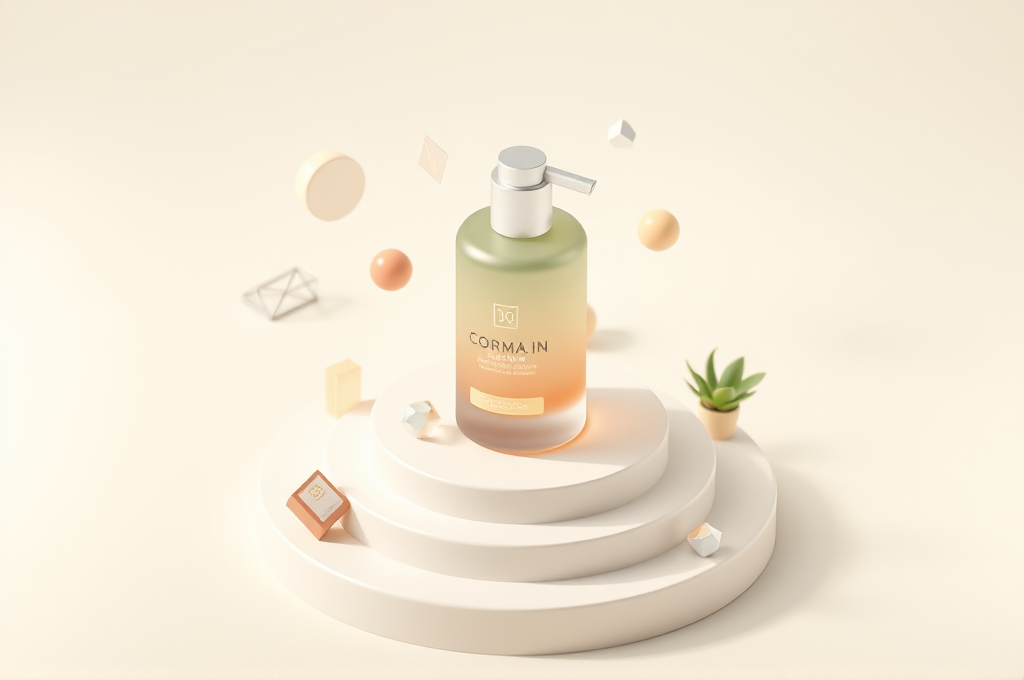
Create a hyper-detailed isometric 3D product mockup rendered as a premium miniature diorama. Center a single hero product (customizable: a cosmetic bottle, tech gadget, coffee cup, or branded packaging box) on a soft rounded pedestal platform. Render in a clean 45-degree isometric camera angle with true orthographic perspective, no distortion, perfectly balanced composition. Use a soft studio-lit environment with gentle global illumination, subtle ambient occlusion in the crevices, and delicate contact shadows grounding every element. Surface finishes should feel tactile and premium: matte plastic, brushed metal accents, frosted glass, and satin cardboard with visible fine paper grain and crisp foil-stamped logo details. Surround the product with small supporting props arranged neatly — tiny floating design elements, a rounded confetti of geometric shapes, minimal decorative plants, and micro packaging accessories that reinforce the brand story. Apply a modern pastel-plus-accent color palette: soft cream, muted sage, warm peach, with one saturated accent color pulled from the product for visual pop. Materials must show realistic subsurface scattering on soft objects and sharp specular highlights on glossy surfaces. Keep negative space clean and airy with a smooth gradient backdrop that fades from light to slightly deeper tone at the base. Emphasize crisp edges, clay-render smoothness blended with photoreal texture, and a squeaky-clean commercial aesthetic. Style: blend of C4D Octane render, product photography, and collectible toy diorama. Ultra sharp focus, 8K detail, cinematic soft rim lighting, professional e-commerce quality. Technical params: aspect ratio 1:1, Leonardo Phoenix or Diffusion XL model, guidance scale 7, PhotoReal or 3D Render style preset, high contrast, enhanced detail on. Negative prompt: blurry, low-poly, distorted perspective, text errors, cluttered, oversaturated, harsh shadows, watermark.
leonardo
#isometric#3d mockup
Rosa Bernardo
art
Isometric Miniature Diorama Ideogram Prompt for Tiny Worlds
Indie game artists, sticker and print shop owners, and social media creators use this prompt to produce shareable, highly engaging miniature-world art that performs exceptionally well on Instagram, Pinterest, and Etsy. The result is a polished, commercially-ready diorama render that looks like a premium 3D studio product. Unlike a simple 'tiny world' prompt, this version specifies isometric angle, tilt-shift blur, layered lighting, and a curated color palette so you get consistent professional results instead of muddy, off-scale outputs.
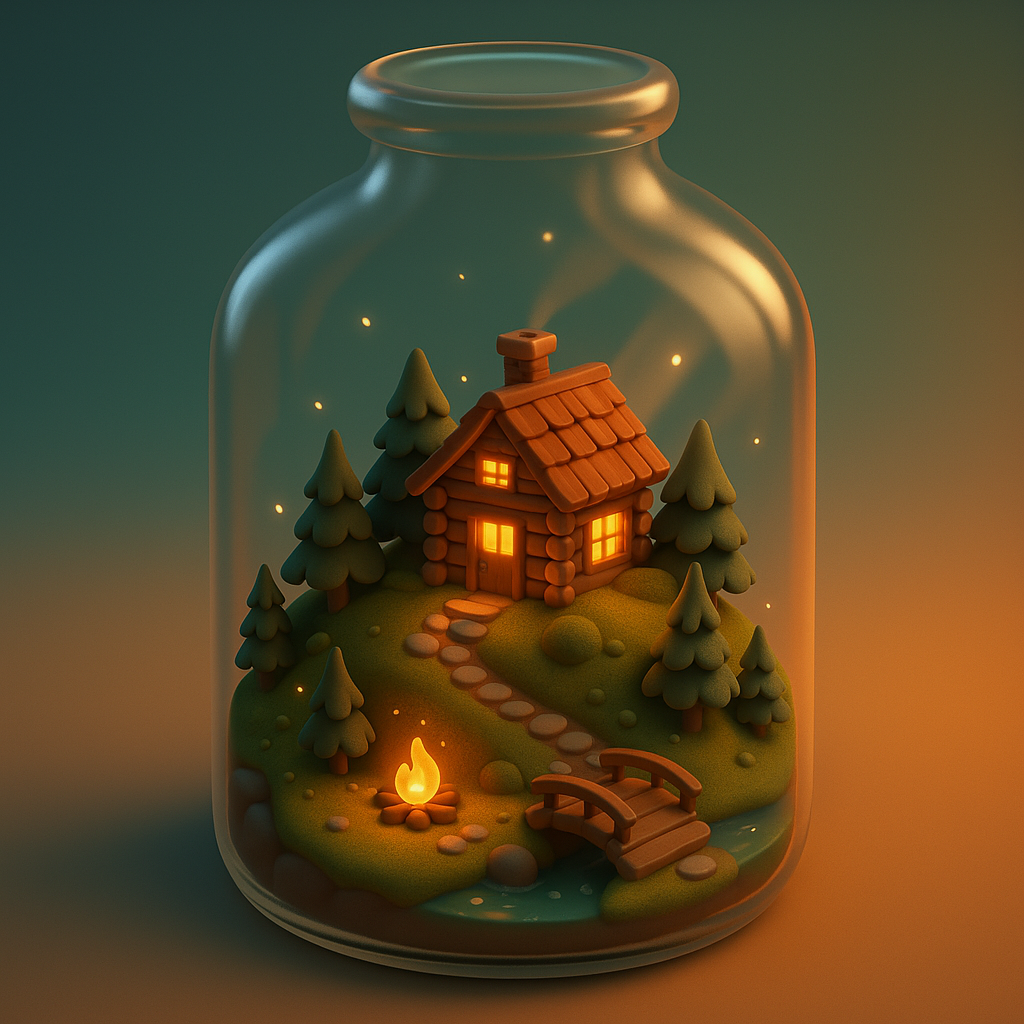
Create a hyper-detailed 3D isometric miniature diorama depicting a tiny self-contained world built inside a vintage glass terrarium jar. Inside, a cozy autumn cabin sits on a hill of moss and miniature pine trees, with a winding cobblestone path leading to a glowing front door. Add a tiny crackling campfire, a hand-carved wooden bridge over a crystal-clear stream, and miniature deer grazing nearby. Floating fireflies and soft volumetric light beams filter through the glass. Style: clean 3D render with soft clay-like textures, Pixar-meets-tilt-shift miniature realism, smooth rounded forms, and high-fidelity material detail (felt moss, polished wood, frosted glass). Lighting: warm golden-hour glow from inside the cabin contrasted with cool blue ambient light outside, soft global illumination, gentle rim lighting on each object, subtle bloom around light sources. Composition: perfect isometric 45-degree angle, centered subject, shallow depth of field with tilt-shift miniature blur on foreground and background edges, plenty of negative space around the jar against a smooth gradient backdrop. Color palette: warm ambers, burnt oranges, deep forest greens, soft creams, and muted teal accents for cozy seasonal harmony. Mood: whimsical, serene, nostalgic, and inviting — a peaceful pocket universe you want to crawl into. Camera angle: elevated isometric perspective looking slightly down into the diorama. Technical details: ultra-high resolution, crisp micro-details, photorealistic miniature scale, clean studio render. Aspect ratio 1:1, square format, sharp focus, professional product-render quality, no text, no watermark.
ideogram
#isometric#diorama
Isabelle Dupont
Design
ChatGPT 3D Render — Cozy Isometric Room Diorama
Generate an adorable isometric 3D room diorama — perfect for app icons, UI illustrations, product visualizations, social posts, and cozy lifestyle renders made with ChatGPT.
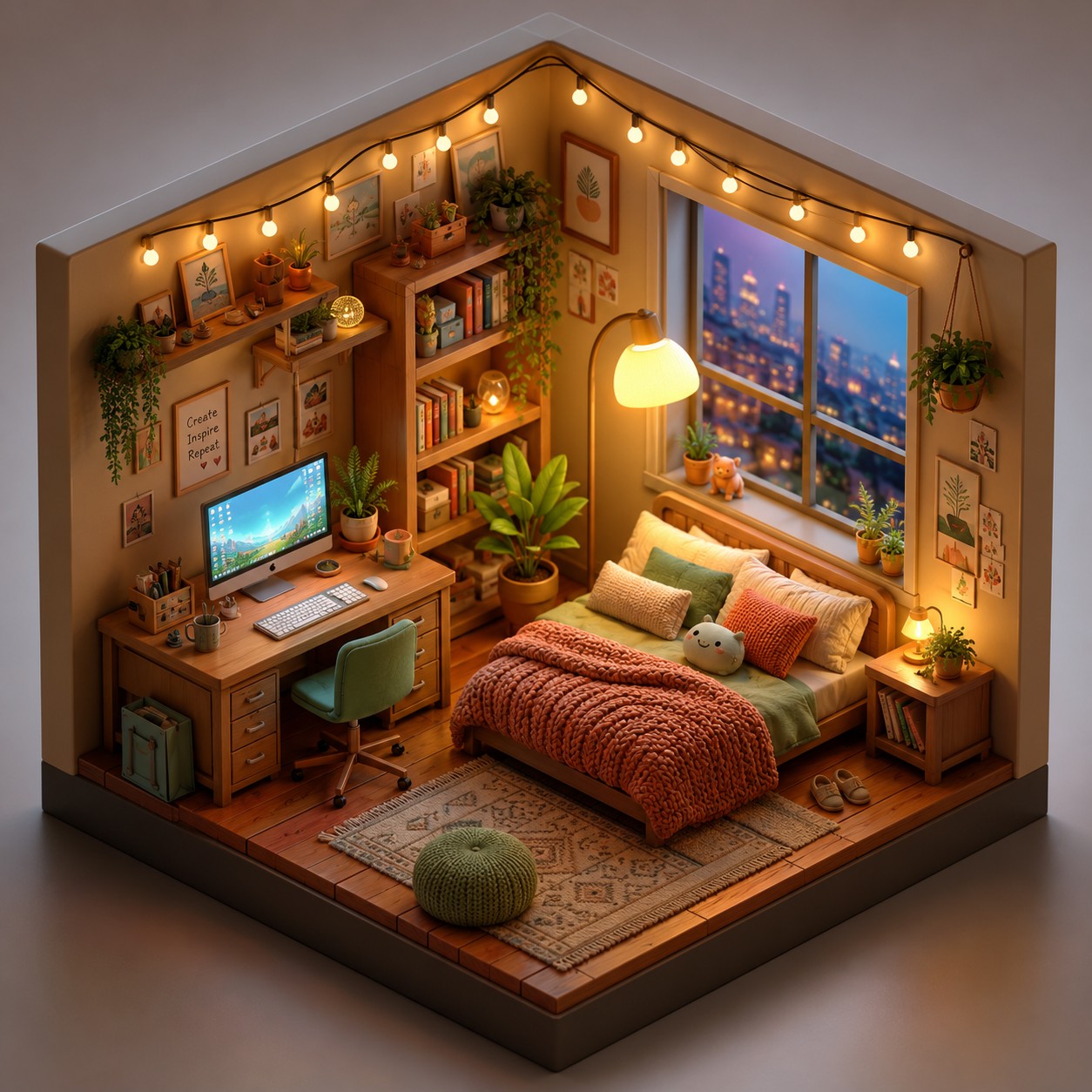
A charming isometric miniature diorama of a cozy creative studio bedroom, rendered in soft clay-like 3D with gently rounded edges and a tactile toy-model feel that makes the whole scene look collectible and handcrafted. The compact room is packed with warm, inviting detail: a small wooden desk holds a glowing computer monitor, a keyboard, a steaming mug, and scattered stationery; a comfy single bed sits beneath the window with a chunky knitted blanket, plush layered pillows, and a tiny stuffed toy; a tall bookshelf is filled with rows of colorful miniature books, small framed photos, trailing potted plants, and decorative trinkets. A warm arc floor lamp arches over the bed, a soft patterned rug anchors the wooden floor, framed artwork and sticky notes decorate the walls, and a string of glowing fairy lights is draped along the sloped ceiling. Warm golden interior lighting radiates from the lamp and the computer screen, creating a snug, lived-in atmosphere, while cool blue evening light spills in through a large window that reveals a softly blurred bokeh city skyline at dusk; the contrast between warm and cool tones gives the render depth and mood. The materials are soft and physically based, with subtle subsurface scattering on fabrics, gentle ambient occlusion gathering in the corners, smooth matte surfaces, and realistic soft contact shadows. The color palette is warm and harmonious, combining cream, terracotta, sage green, honey wood tones, and gentle teal accents. Composition is a clean isometric three-quarter view, perfectly centered, with a softly blurred neutral background and a faint drop shadow grounding the floating room. The overall mood is cozy, calm, wholesome, and delightful. Technical qualities: global illumination, ray-traced soft shadows, shallow depth of field, ultra-detailed textures, 8K resolution, Octane and Blender style 3D rendering, professional product visualization quality, and the trending miniature diorama aesthetic that performs beautifully as ChatGPT-generated render art for icons, thumbnails, and lifestyle visuals.
ChatGPTDALL-E
#chatgpt#3d render
Felix Wagner
Design
OpenAI Image Generator — Futuristic Studio Concept
A cinematic concept visualization of AI image generation — perfect for tech blog headers, AI tool landing pages, presentations, and futuristic marketing visuals.
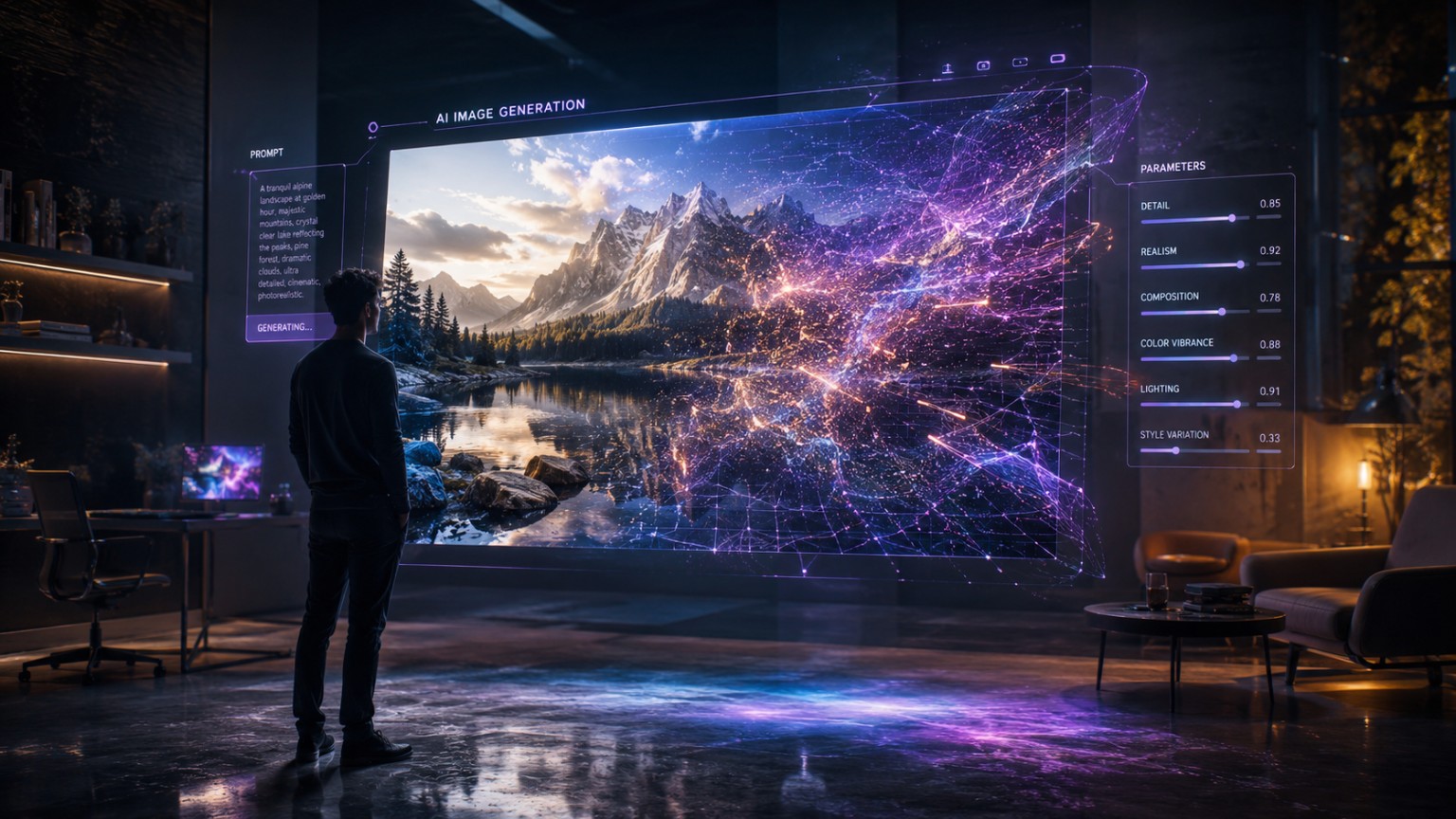
Inside a sleek, dimly lit futuristic creative studio, a vast floating holographic canvas hovers in mid-air at the center of the room, and across its luminous surface a hyper-realistic photograph is actively materializing out of swirling streams of light particles, glowing data threads, and fine luminous dust. The left half of the canvas already shows a fully formed, vivid mountain-and-lake landscape photograph with crisp detail and natural color, while the right half is still resolving from abstract neon noise and fragmented geometry into sharp focus, visually capturing the exact moment of AI image generation in progress. A lone figure in a dark minimalist outfit stands before the canvas, seen from behind in silhouette, gazing up at the unfolding image, which lends a sense of scale and human wonder to the scene. Floating beside the canvas are thin, translucent holographic UI panels displaying a prompt text box, glowing parameter sliders labelled detail, realism, composition, and lighting, and subtle progress indicators, all rendered in delicate neon line-work. Soft volumetric god-rays cut through a faint atmospheric haze, and cool blue-and-magenta ambient lighting fills the room, reflecting in long streaks across a polished dark concrete floor. Warm amber accent lights from a lamp and shelving in the background add depth and contrast against the cool tones. The overall color palette blends deep teal, electric violet, and warm amber highlights for a balanced, premium look. The mood is sophisticated, intelligent, calm, and slightly magical, evoking the feeling of cutting-edge technology meeting creativity. Composition uses a wide cinematic framing with strong leading lines drawn toward the canvas, a shallow depth of field that keeps the figure and canvas crisp while the surroundings softly blur, and dramatic rim lighting separating subject from background. Technical specifications: ultra-detailed, 8K resolution, photorealistic 3D render, volumetric lighting, ray-traced reflections, sci-fi product-launch aesthetic, shot as if on a full-frame cinema camera with a 24mm wide lens. The final image should feel like a flagship promotional key-visual for a next-generation AI image generator.
ChatGPTDALL-E
#ai#openai
Caleb Foster