art
Blueprint Schematic Art Prompt for Ideogram Diagrams
Designers, engineers, and content creators use this prompt to generate patent-style blueprint art for posters, product marketing, tech blogs, and educational materials. Ideogram's strong text rendering makes it ideal for legible annotations, part labels, and title blocks that other models struggle with. The result is a professional, print-ready schematic that works as wall art, packaging graphics, or explainer visuals. Perfect for makers who want a nostalgic drafting-table look with modern polish.
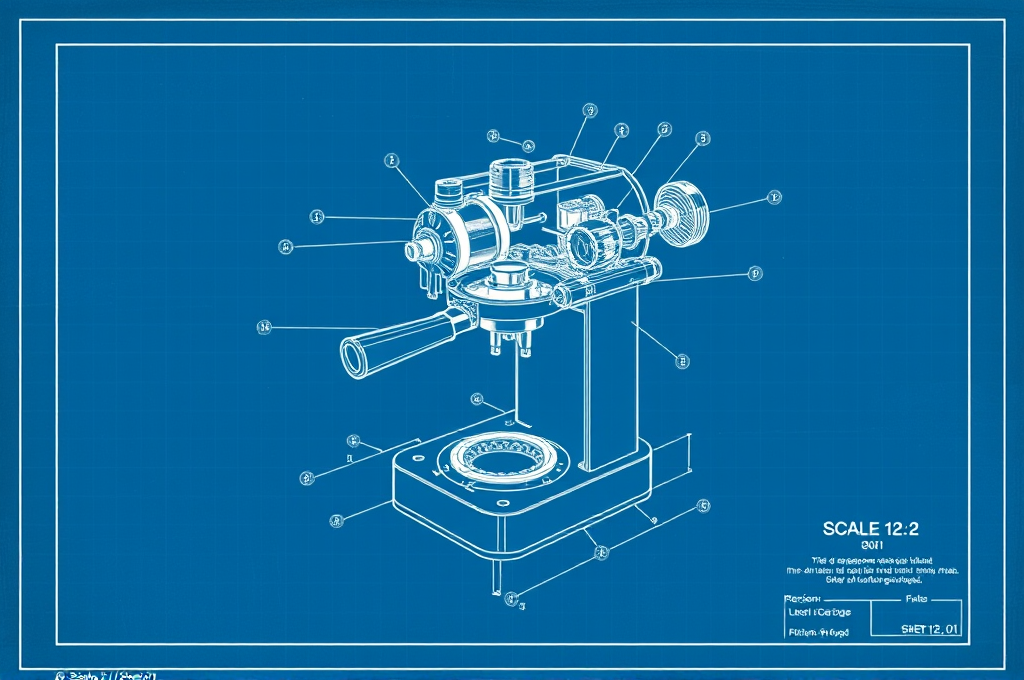
Output Sample
The Prompt
Create a highly detailed technical blueprint schematic illustration of [SUBJECT — e.g., a vintage espresso machine], rendered as an authentic engineering drawing on a deep cyan-blue drafting background. Depict the object in crisp white and pale-blue line work with precise vector-style contours, showing an exploded-view breakdown where individual components float apart to reveal internal mechanisms. Include multiple orthographic projections: a front elevation, a side profile, and a top-down plan view arranged in a clean grid layout. Add fine measurement lines, dimension arrows, callout leader lines, and circled reference numbers pointing to labeled parts. Incorporate handwritten-style engineering annotations, technical typography, and small legends in the margins reading realistic component names, tolerances, and part codes. Render a title block in the bottom-right corner with fields for 'DRAWN BY', 'SCALE 1:2', 'SHEET 01', and a revision table. Use faint grid graph-paper texture across the entire canvas for authenticity. Maintain a monochromatic blueprint palette — cyan, navy, and white — with subtle aged-paper vignetting at the edges for a printed drafting-table feel. Keep line weights varied: bold outlines for silhouettes, thin lines for hidden edges (dashed), and hairlines for hatching and cross-sections. Emphasize symmetry, mechanical precision, and drafting accuracy so the piece reads as a genuine patent illustration. Balance negative space so annotations remain legible and uncluttered. Style: technical illustration, patent drawing, isometric exploded diagram, architectural blueprint aesthetic. Text should render cleanly and sharply. Aspect ratio 4:3, high resolution, sharp vector-like clarity, professional drafting quality. --style raw, magic prompt off, rendering high quality.
How to use
- Copy the prompt above using the copy button
- Replace any [bracketed placeholders] with your details
- Paste into ideogram
- Adjust and iterate based on the result
Shared by
Yuna Park
Seoul-based K-pop content creator. I use Midjourney to visualise concept art for fan edits and personal projects.
Works With
ideogram
Details
Categoryart
AddedJul 22, 2026
Shared by
Yuna Park
Seoul-based K-pop content creator. I use Midjourney to visualise concept art for fan edits and personal projects.
Ready to use this?
Copy and paste directly into your AI tool.
Community Reviews
You might also like
Design
Exploded View Technical Product Diagram Prompt for DALL-E
Product designers, marketing teams, and technical illustrators use this prompt to generate polished exploded-view visuals for pitch decks, spec sheets, crowdfunding pages, and e-commerce listings. It produces a professional engineering-catalog aesthetic without needing CAD software or a photographer. Startups showcasing hardware and educators explaining how devices work get clear, annotated component breakdowns in seconds. The result communicates craftsmanship and complexity while looking premium and trustworthy.
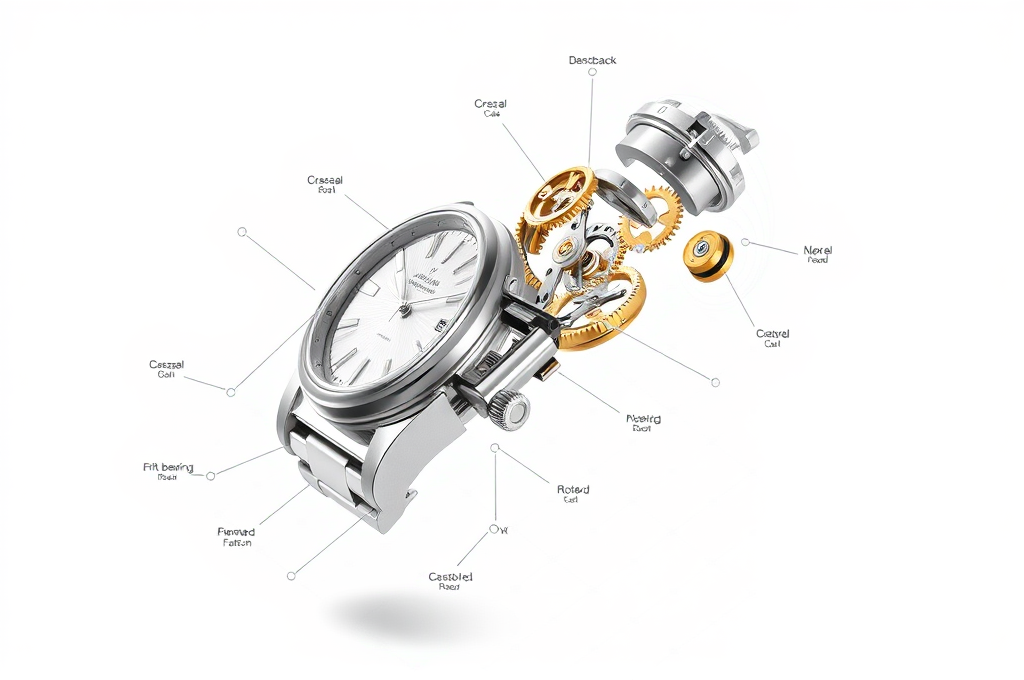
Create a hyper-detailed exploded-view technical diagram of a [PRODUCT — e.g. vintage mechanical wristwatch], with every internal and external component separated and suspended in mid-air along a single clean diagonal axis, as if disassembled and frozen in space. Arrange the parts in precise sequential order following the true assembly path, maintaining perfect alignment so the eye traces how each piece fits into the next. Render each component — the case, bezel, crystal, dial, gears, mainspring, rotor, crown, and caseback — with photoreal material accuracy: brushed stainless steel, polished brass gears, ruby jewel bearings, and matte engraved surfaces. Use thin dotted guide lines connecting each separated part back to its assembly position. Add slim leader lines and minimalist sans-serif annotation labels (part names and numbers) floating in clean margins, styled like a premium engineering blueprint or patent illustration. Lighting should be bright, even studio light with soft shadows beneath each floating part to reinforce depth. Background is a seamless off-white or pale blueprint-gradient surface with subtle grid lines. Composition should feel balanced, airy, and instantly readable, with generous negative space around the labels. Prioritize crisp edges, accurate proportions, and a sense of scientific precision blended with modern product-marketing polish. The overall aesthetic should look like a luxury catalog cutaway meets a technical patent drawing. Technical params: aspect ratio 3:2, ultra-high resolution, sharp focus edge-to-edge, isometric-leaning three-quarter camera angle, soft ambient occlusion shadows, neutral color grading, DALL-E 3 high-detail rendering, no motion blur, clean vector-like linework for callouts.
dall-e
#exploded view#technical diagram
Maya Chen
Design
Y2K Chrome Metallic Packaging Design Prompt for Ideogram
Brand designers, packaging studios, and e-commerce founders use this to prototype eye-catching product packaging without a full photoshoot. Marketing teams generate scroll-stopping hero images for beverage, cosmetic, or tech-lifestyle launches. Freelancers pitch clients faster with polished chrome-aesthetic concepts. The result is a premium, text-accurate packaging mockup ready for social ads or moodboards.
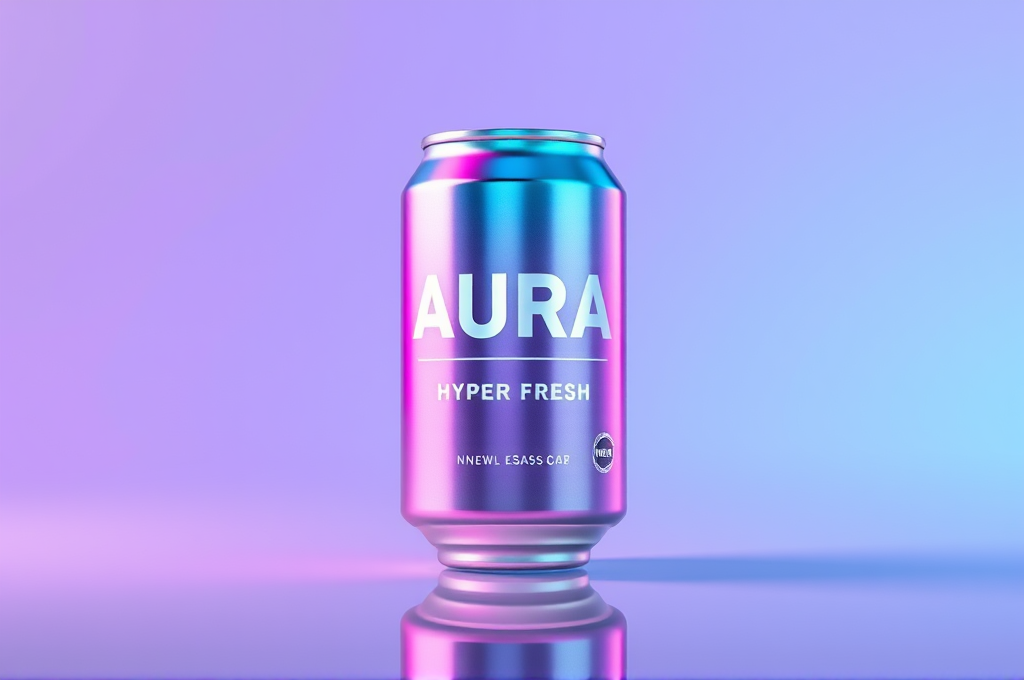
Design a premium product packaging mockup rendered in a Y2K chrome-metallic aesthetic, presented on a clean studio background. The hero element is a modern beverage can (or cosmetic bottle) featuring a bold liquid-chrome logo with the exact text 'AURA' spelled clearly in a heavy geometric sans-serif, wrapped in a glossy iridescent finish that reflects soft pink, cyan, and silver highlights. Surround the primary text with secondary tagline text reading 'HYPER FRESH' in a smaller condensed uppercase font, kerned tightly for a futuristic feel. Composition: front-facing product centered using the rule of thirds, floating slightly above a reflective surface with a subtle mirrored shadow. Materials should look like polished liquid metal, brushed aluminum accents, and holographic foil, with crisp specular reflections and smooth gradient ramps from deep blue to warm silver. Lighting is high-key studio lighting with two soft boxes creating clean edge highlights and a gentle rim light to define the metallic curvature. Background is a minimalist gradient of pale lavender to icy blue with faint lens-flare glints. Include tiny UI-style graphic elements: a barcode, a small circular seal reading 'NEW', and a metallic drip motif along the bottom. Emphasize legible, well-spaced typography with accurate letterforms — no distorted or gibberish text. Style keywords: Y2K revival, chrome typography, product photography, iridescent, futuristic branding, clean vector-meets-3D render. Aspect ratio 4:5 for social commerce. Render in ultra-high resolution with sharp focus, photorealistic reflections, and a polished commercial finish suitable for a real product launch.
ideogram
#y2k design#chrome typography
Maya Chen
Design
Y2K Chrome Logo Design Prompt for Ideogram Branding
Brand designers, indie musicians, and streetwear founders use this to spin up eye-catching chrome logos and cover art in minutes without hiring a 3D artist. Ideogram's superior text engine keeps brand names spelled correctly and kerned cleanly, which most image models fail at. The result is a polished, presentation-ready logo lockup ideal for social avatars, album covers, merch, and pitch decks. Swap the brand name, tagline, and gradient colors to instantly generate on-brand variations.
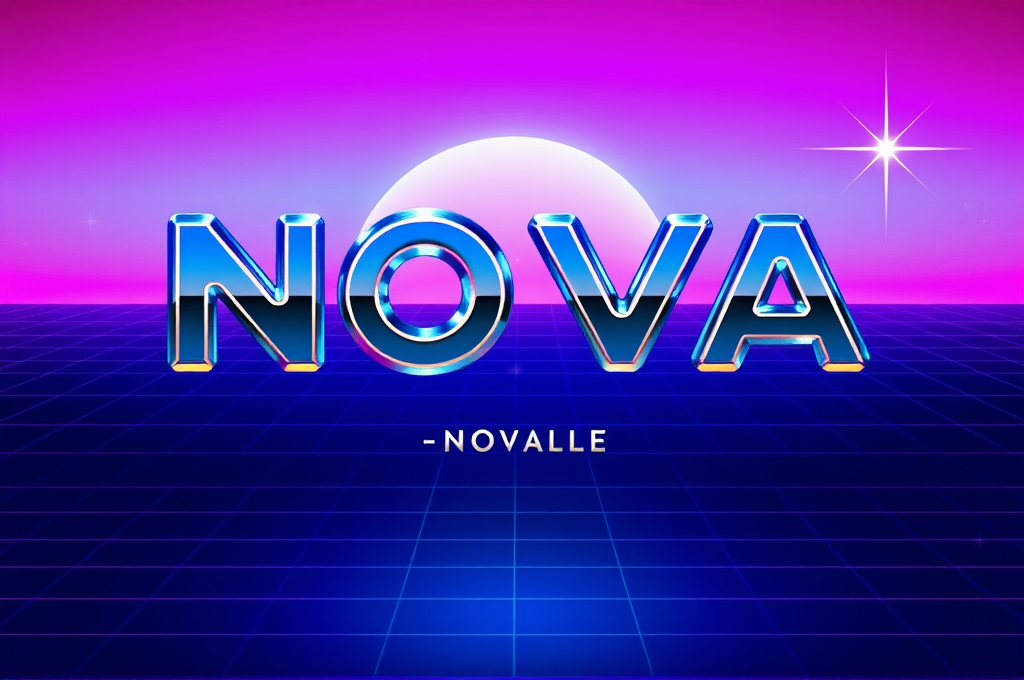
Design a bold Y2K-inspired chrome logo lockup with flawless, legible typography rendered in liquid metal. Center the wordmark "[YOUR BRAND]" in a heavy, rounded sans-serif with slightly stretched glyphs, giving it an early-2000s tech confidence. Render the letters as polished liquid chrome with mirror-finish reflections, subtle rainbow chromatic aberration along the edges, and soft anisotropic highlights that suggest brushed metal catching studio light. Add a beveled inner shine and a crisp specular hotspot on the top-left of each letter for a tactile, three-dimensional feel. Beneath the wordmark, place a smaller tagline "[YOUR TAGLINE]" in a clean condensed uppercase, tinted holographic silver so it reads clearly without competing with the main mark. Set the composition against a vaporwave gradient background flowing from electric magenta into cyan and deep indigo, with faint scan-line texture and a subtle grid horizon fading into the distance. Introduce floating chrome accent shapes — a small orbiting sphere, a swoosh, and a starburst spark — positioned to balance negative space without cluttering the logo. Ensure high contrast between the reflective type and background so the branding stays crisp at small sizes. Lighting should be studio soft-box with a strong rim light to define the metallic form. Keep edges razor-sharp, avoid noise, and maintain perfect spelling and even kerning. Deliver a centered, symmetrical, presentation-ready logo suitable for tech startups, music covers, streetwear tags, and app icons. Style: retro-futuristic, glossy, premium, nostalgic yet modern. Technical params: --ar 1:1, resolution 2048x2048, rendering mode QUALITY, magic prompt OFF, style type DESIGN, color palette VIBRANT, seed 88421 for reproducibility.
ideogram
#y2k#chrome logo
Anup Pokharel
art
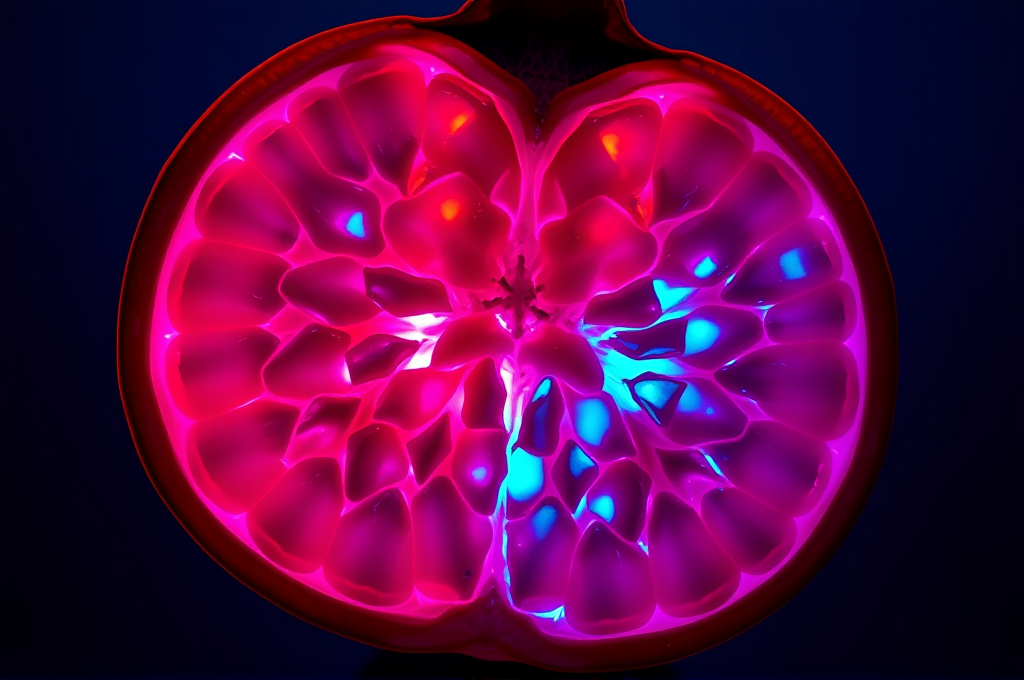
Glowing Botanical X-Ray Fruit Cross-Section Art for SD
Digital artists, science communicators, and botanical illustrators use this prompt to create striking educational and decorative imagery. Food brands and wellness companies leverage it for premium packaging, posters, and social media content. Interior designers print these as gallery-style wall art for modern kitchens and labs. The result is a luminous, scientifically-inspired artwork that balances aesthetic drama with anatomical accuracy.
A hyper-detailed botanical X-ray cross-section of a ripe pomegranate, sliced perfectly in half to reveal translucent, glowing seed chambers. Each individual aril shimmers with internal luminescence, casting soft radiant light through the membrane walls. The entire fruit appears rendered in an ethereal X-ray style: bones-of-botany aesthetic, where cellular structures, veins, and fibrous strands are visible like intricate biological circuitry. Deep indigo and midnight-black background to maximize contrast against the neon-magenta, amber, and bioluminescent-teal internal glow. Render as scientific illustration meets fine art, combining the precision of a botanical textbook plate with the dramatic lighting of modern digital art. Composition: centered subject, macro focus, symmetrical cut, shallow depth of field with crisp edge definition. Lighting: internal subsurface scattering, backlit translucency, volumetric glow emanating from within the fruit, subtle rim light tracing the outer skin. Texture: show micro-details — seed clusters, fibrous pith, delicate juice vesicles, cellular membranes with semi-transparent layering. Color palette: electric magenta, radioactive amber, emerald bioluminescence, deep violet shadows. Style influences: medical X-ray imaging, Ernst Haeckel botanical plates, cyberpunk neon, scientific infographic clarity. Add faint anatomical annotation lines and measurement ticks for an authentic scientific-diagram feel, kept minimal and elegant. Ultra-sharp, 8K resolution, hyperrealistic rendering. Technical parameters: Steps: 35, Sampler: DPM++ 2M Karras, CFG scale: 7.5, Resolution: 1024x1024 (or 832x1216 portrait), Seed: random, Model: SDXL 1.0 or Juggernaut XL. Negative prompt: blurry, low-contrast, flat lighting, washed out colors, cartoonish, oversaturated noise, watermark, text artifacts, dull background, distorted anatomy, extra fruit, cluttered composition.
stable-diffusion
#botanical xray#fruit cross-section
Leila Ahmadi